Personal stories of denied care are set against other national systems to challenge what Americans accept as inevitable.
Why this matches +
These films share important themes, atmosphere or storytelling interests with this selection.
Genres: Documentary
Shared film traits
Based on recorded story, mood and style. Your preferences can change the order.
What changes Its own story: Personal stories of denied care are set against other national systems to challenge what Americans accept as inevitable.
Michael Moore examines the American health-care system by comparing personal accounts of denied treatment and financial hardship with systems in other countries. The documentary follows patients, workers and institutions to make access to care a public question rather than a private misfortune. Its arguments are presented through interviews, staged visits and pointed contrasts, blending advocacy with humor while asking who bears responsibility when illness meets bureaucracy.
McNamara’s explanations reveal both his willingness to criticize past decisions and his limits in accounting for them.
Why this matches +
These films share important themes, atmosphere or storytelling interests with this selection.
Genres: Documentary / History
Shared film traits
Based on recorded story, mood and style. Your preferences can change the order.
War and civilian life
What changes Its own story: McNamara’s explanations reveal both his willingness to criticize past decisions and his limits in accounting for them.
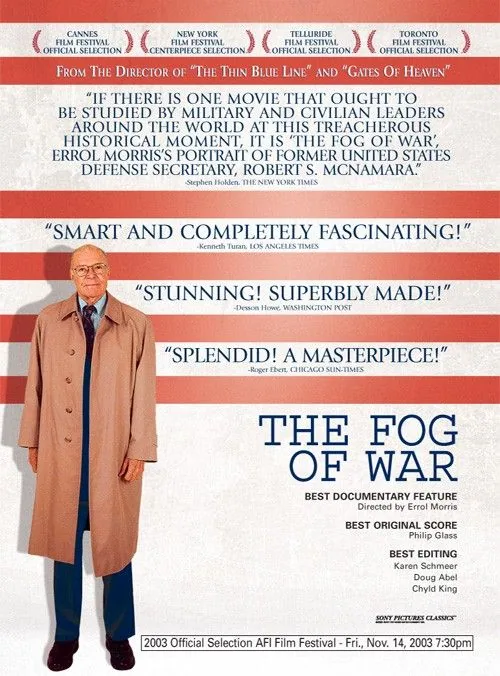
Director Errol Morris interviews former U.S. Secretary of Defense Robert McNamara, pairing his recollections with archival footage and recordings from government discussions. Structured around eleven lessons, the documentary follows McNamara’s life and examines his role in the bombing campaigns of World War II, the Cuban Missile Crisis and the escalation of the Vietnam War. He reflects on how leaders make decisions with incomplete information and sometimes speaks critically about his own actions. The film leaves viewers weighing the distance between strategic reasoning and human consequences.
Moore’s interviews and contrasts test competing explanations for the prevalence of gun violence.
Why this matches +
These films share important themes, atmosphere or storytelling interests with this selection.
Genres: Documentary
Shared film traits
Based on recorded story, mood and style. Your preferences can change the order.
What changes A related investigative polemic changes its focus to gun violence and public explanation; its structure is less dominated by wartime suffering than the source.
Michael Moore assembles interviews, news material and pointed juxtapositions to investigate gun violence and gun culture in the United States. The film begins with the Columbine school shooting but widens its inquiry toward fear, media narratives, history and public policy. Its argumentative documentary form invites viewers to consider how evidence and framing shape explanations of violence rather than offering a detached survey.
Poitras documents the meeting in which Snowden discloses NSA surveillance evidence to journalists and prepares to go public.
Why this matches +
These films share important themes, atmosphere or storytelling interests with this selection.
Genres: Documentary / History
Shared film traits
Based on recorded story, mood and style. Your preferences can change the order.
What changes Its own story: Poitras documents the meeting in which Snowden discloses NSA surveillance evidence to journalists and prepares to go public.
Documentarian Laura Poitras receives encrypted messages from someone using the name Citizen Four and travels to Hong Kong with journalists Glenn Greenwald and Ewen MacAskill. There they meet Edward Snowden, who reveals classified information about government surveillance programs while protecting his identity inside a hotel room. The film records the disclosures as they unfold, including the reporters' decisions, Snowden's anxiety, and the public consequences that begin to follow. Its immediacy comes from watching an international news story develop in real time.
A government translator leaks a memo that could influence the Iraq invasion and is prosecuted for revealing it.
Why this matches +
These films share important themes, atmosphere or storytelling interests with this selection.
Genres: Drama / Thriller
The approach A dramatic feature rather than documentary footage.
Shared film traits
Based on recorded story, mood and style. Your preferences can change the order.
What changes Its own story: A government translator leaks a memo that could influence the Iraq invasion and is prosecuted for revealing it.
In 2003, GCHQ translator Katharine Gun sees a request for intelligence that could help secure support for the invasion of Iraq. Believing the request is illegal and morally indefensible, she leaks a memo to the press, then faces arrest under Britain's Official Secrets Act. The film follows the effort to verify the story, the mounting pressure on Gun and her husband, and a legal case whose outcome depends on whether the government will disclose its own conduct.
Jones and his small team examine a vast record and try to substantiate what the CIA did during interrogation.
Why this matches +
These films share important themes, atmosphere or storytelling interests with this selection.
Genres: Drama / History
The approach A dramatic feature rather than documentary footage.
Shared film traits
Based on recorded story, mood and style. Your preferences can change the order.
What changes Its own story: Jones and his small team examine a vast record and try to substantiate what the CIA did during interrogation.
In 2009, Senate staffer Daniel Jones is asked to review millions of pages of CIA records about the agency's post-9/11 interrogation program. Working with a small team, he documents how officials authorized and described the practices, while facing delays, political pressure, and resistance from the intelligence agency. Senator Dianne Feinstein backs the inquiry, but the report's publication becomes a struggle of its own. The political drama follows the patient work of assembling evidence and making an official record public.
Garrison’s inquiry grows from doubts about a lone gunman into a sweeping institutional accusation. The trial organizes the case dramatically, but the film’s narrative is substantially broader than what a verdict or any single report could establish.
Why this matches +
These films explore a related idea in a different setting, genre or style.
An adjacent discovery: a related idea with a different viewing experience.
Genres: Drama / Thriller
The approach A dramatic feature rather than documentary footage.
Shared film traits
Based on recorded story, mood and style. Your preferences can change the order.
What changes Its own story: Garrison’s inquiry grows from doubts about a lone gunman into a sweeping institutional accusation. The trial organizes the case dramatically, but the film’s narrative is substantially broader than what a verdict or any single report could establish.
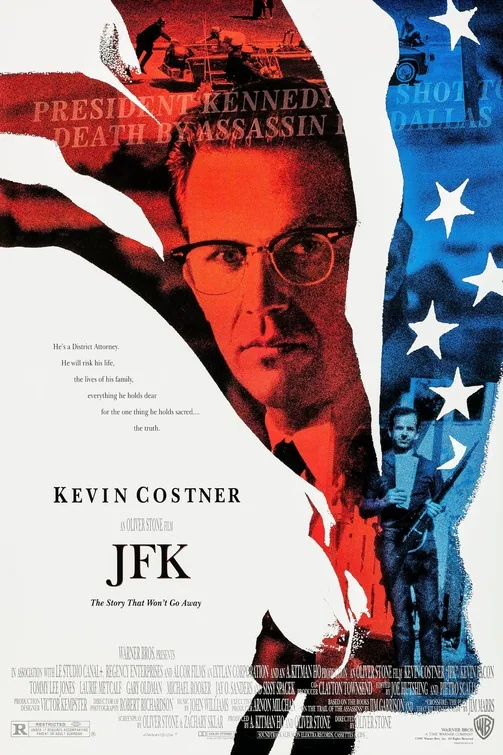
New Orleans district attorney Jim Garrison reopens questions around President Kennedy’s assassination after rejecting the Warren Commission’s account. Interviews and reconstructions lead him toward a theory that stretches from Lee Harvey Oswald to a possible conspiracy involving intelligence agencies and political power. A courtroom presentation gives the inquiry a public climax, but the film’s rapid montage has already mixed recorded evidence, dramatized scenes and imagined connections into a single persuasive current. Its argument should be attributed to Oliver Stone’s political thriller rather than repeated as settled history. The House Select Committee on Assassinations later reached its own, qualified conclusion of probable conspiracy based in part on acoustic evidence; that finding does not validate every person, motive or causal link the film proposes.
Each failed search shifts Miller’s attention from battlefield danger toward the reliability of the mission’s premise.
Why this matches +
These films explore a related idea in a different setting, genre or style.
An adjacent discovery: a related idea with a different viewing experience.
Genres: Action / Thriller
The approach A dramatic feature rather than documentary footage.
Shared film traits
Based on recorded story, mood and style. Your preferences can change the order.
War and civilian life
What changes Its own story: Each failed search shifts Miller’s attention from battlefield danger toward the reliability of the mission’s premise.
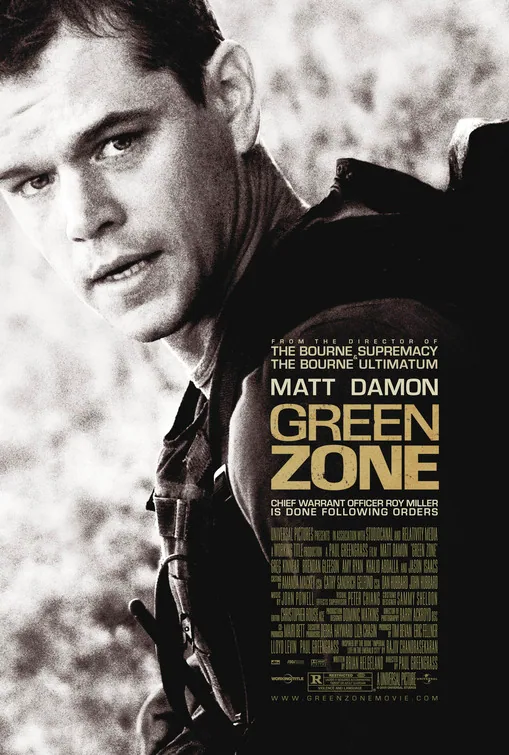
During the 2003 invasion of Iraq, warrant officer Roy Miller repeatedly searches sites reported to contain weapons of mass destruction and finds them empty. When his questions meet official resistance, he pursues local intelligence that could explain the false leads, risking his position and safety. The political action thriller places an investigation inside a war zone, tying fast-moving military operations to contested information and institutional credibility.
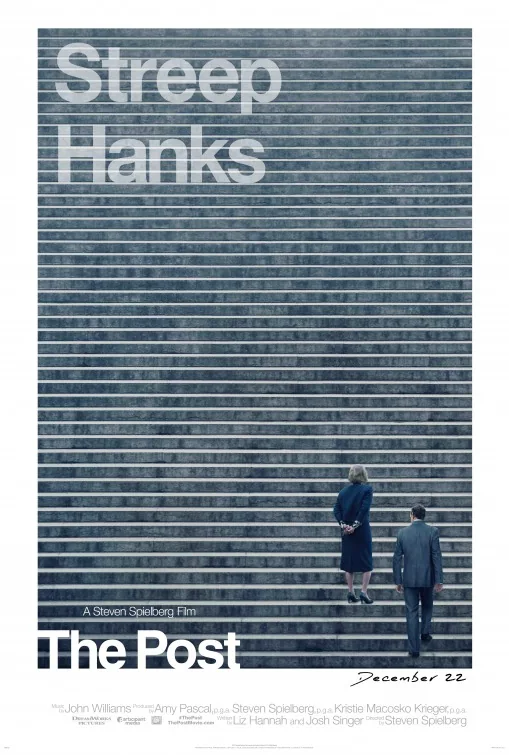
A Supreme Court fight over the Times's publication raises the stakes of the Post's own decision to print classified documents before a public offering.
Why this matches +
These films explore a related idea in a different setting, genre or style.
An adjacent discovery: a related idea with a different viewing experience.
Genres: Drama / Thriller
The approach A dramatic feature rather than documentary footage.
Shared film traits
Based on recorded story, mood and style. Your preferences can change the order.
What changes A more restrained scripted newsroom procedural replaces the documentary filmmaker's direct, confrontational political argument.
In 1971, Washington Post publisher Katharine Graham weighs the future of the paper as it prepares for a public stock offering and faces pressure from the Nixon administration. After the New York Times is enjoined from publishing the Pentagon Papers, editor Ben Bradlee pushes the Post to obtain and print the documents. Graham must decide whether the paper's duty to readers outweighs legal risk, possible criminal charges and the financial exposure of a company about to go public. Reporters work to verify the leak while lawyers and board members argue over what can safely be published. The story follows a newsroom making an institutional choice under a deadline, with Graham's authority changing as she moves from social and business constraints toward editorial responsibility.
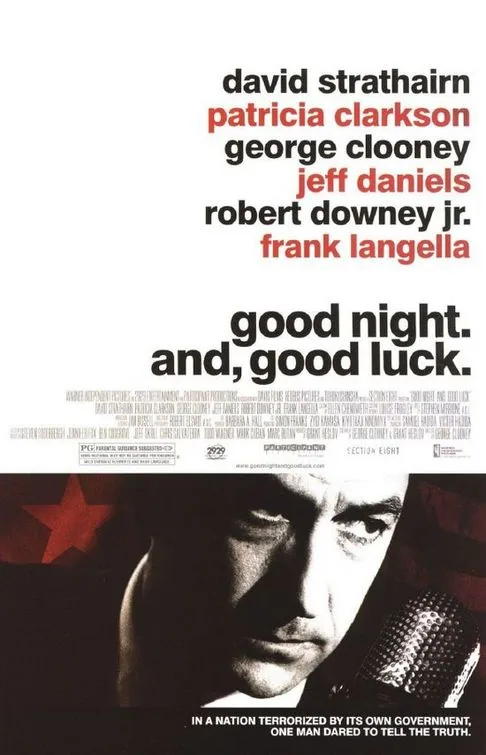
A newsroom's evidence-based challenge to political intimidation tests how far a commercial broadcaster will support the independence it publicly endorses.
Why this matches +
These films explore a related idea in a different setting, genre or style.
An adjacent discovery: a related idea with a different viewing experience.
Genres: Drama / History
The approach A dramatic feature rather than documentary footage.
Shared film traits
Based on recorded story, mood and style. Your preferences can change the order.
What changes A compact scripted broadcasting drama focuses on institutional pressure through restrained newsroom scenes rather than a broad documentary polemic.
A television news team challenges accusations and procedures associated with Senator McCarthy while working inside a network vulnerable to sponsors and political pressure. Decisions about evidence, wording and airtime make editorial independence a practical risk rather than an abstract professional virtue. Personal consequences unfold around the broadcasts, including scrutiny of colleagues whose lives do not fit institutional rules. The restrained historical drama presents journalism as coordinated work whose public authority depends on choices made under commercial and political constraint.
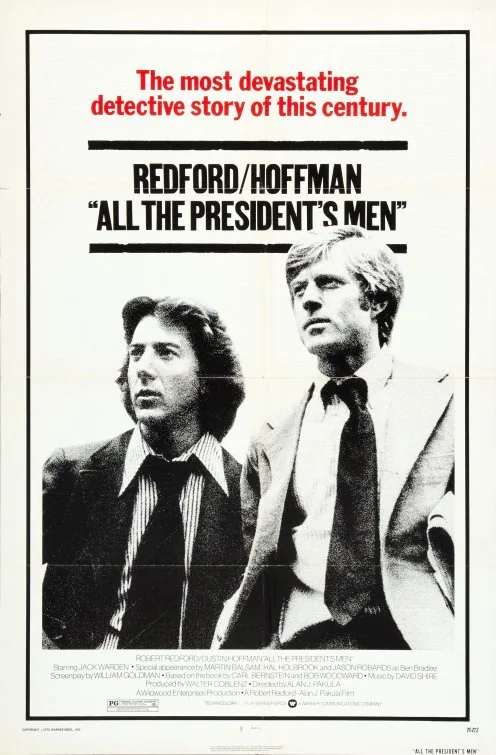
Small inconsistencies accumulate into a publishable case through interviews, documents and repeated verification.
Why this matches +
These films explore a related idea in a different setting, genre or style.
An adjacent discovery: a related idea with a different viewing experience.
Genres: Drama / Thriller
The approach A dramatic feature rather than documentary footage.
Shared film traits
Based on recorded story, mood and style. Your preferences can change the order.
What changes Its own story: Small inconsistencies accumulate into a publishable case through interviews, documents and repeated verification.
Two newspaper reporters investigate a burglary whose apparently minor details lead towards senior political figures. Interviews, records and reluctant sources gradually reveal a larger operation, but each claim requires corroboration before publication. Their progress depends less on a single revelation than on patient persistence inside a newsroom negotiating evidence, risk and the pressure exerted by powerful people.
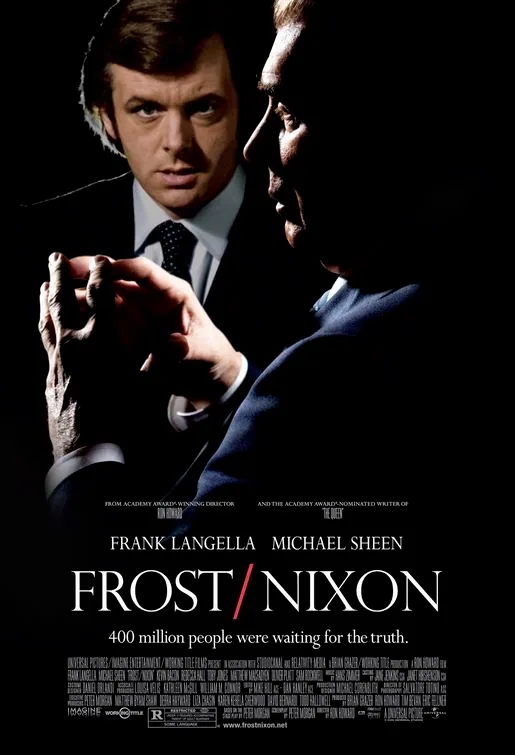
A privately financed interview becomes a struggle for control when the subject's rehabilitation strategy clashes with the interviewer's need to establish political accountability.
Why this matches +
These films explore a related idea in a different setting, genre or style.
An adjacent discovery: a related idea with a different viewing experience.
Genres: Drama / History
The approach A dramatic feature rather than documentary footage.
Shared film traits
Based on recorded story, mood and style. Your preferences can change the order.
What changes A scripted interview contest substitutes contained professional and verbal tension for the source's expansive political documentary argument.
A television interviewer risks money and professional credibility on conversations with a former president seeking to restore his reputation. The participants enter the sessions with different objectives, and Nixon's command of public performance initially defeats Frost's preparation. Researchers and producers press for accountability while commercial pressures threaten the project itself. The drama makes an interview into a contest over who can define the meaning of a political past, with reputational survival giving both men an urgent personal stake.
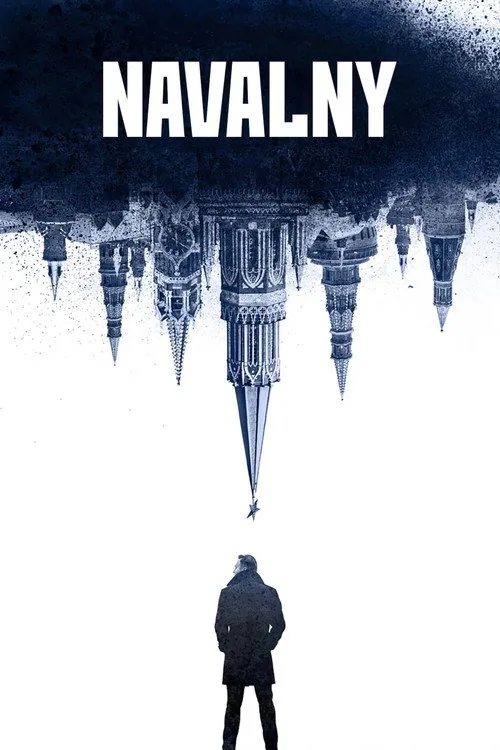
Navalny and the journalists test leads and evidence to identify those behind the attempt on his life.
Why this matches +
These films explore a related idea in a different setting, genre or style.
An adjacent discovery: a related idea with a different viewing experience.
Genres: Documentary / Biography
Shared film traits
Based on recorded story, mood and style. Your preferences can change the order.
What changes Its own story: Navalny and the journalists test leads and evidence to identify those behind the attempt on his life.
Daniel Roher’s documentary follows Russian opposition politician Alexei Navalny after he survives a poisoning in 2020 and recovers in Germany. With his family and a team of investigative journalists, Navalny tries to identify those responsible and trace the operation through a mix of interviews, digital evidence, and direct contact with people connected to the case. The film unfolds as a political documentary thriller, combining an intimate portrait of its subject with the mechanics of an investigation and the risks of returning to public opposition.
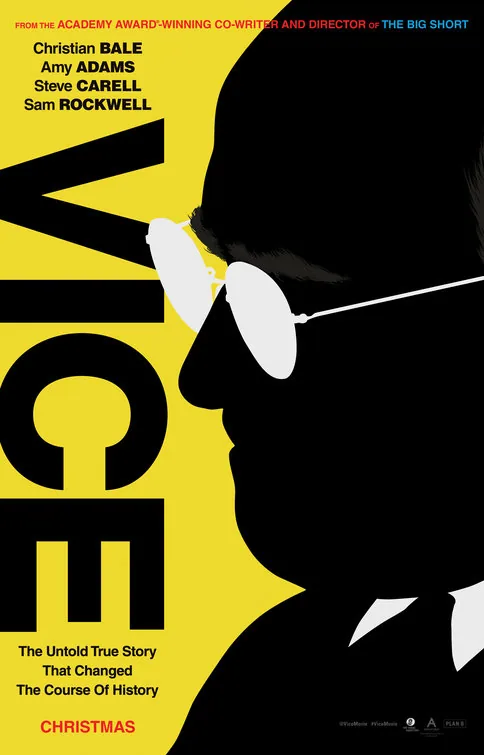
A political biography tracks Cheney's path into the vice presidency and the expansion of executive authority.
Why this matches +
These films explore a related idea in a different setting, genre or style.
An adjacent discovery: a related idea with a different viewing experience.
Genres: Drama / Comedy
The approach A dramatic feature rather than documentary footage.
Shared film traits
Based on recorded story, mood and style. Your preferences can change the order.
War and civilian life
What changes Its own story: A political biography tracks Cheney's path into the vice presidency and the expansion of executive authority.
Dick Cheney moves from a troubled early adulthood into a career of political influence, working through presidential administrations and eventually becoming vice president under George W. Bush. The film follows his rise alongside the expansion of executive power and decisions surrounding the Iraq War. Its satirical narration and formal tricks interrupt the biography to question how ambition, institutional systems and public fear can change a government.
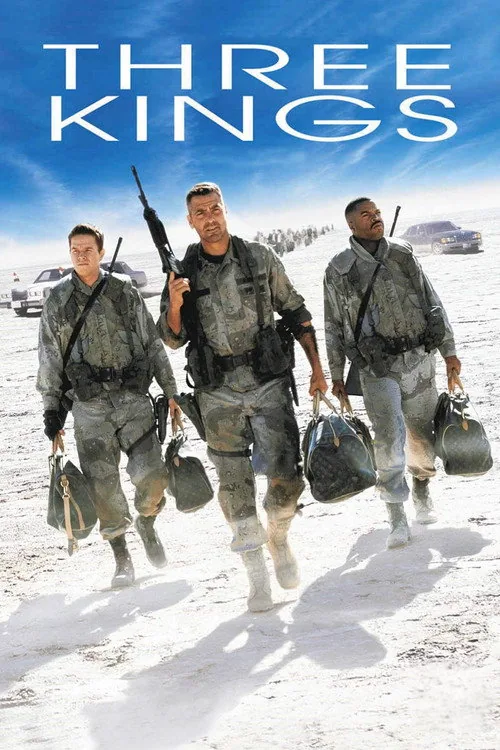
A map to stolen gold sends the soldiers beyond their safe post and into a crisis their original plan did not account for.
Why this matches +
These films explore a related idea in a different setting, genre or style.
An adjacent discovery: a related idea with a different viewing experience.
Genres: War / Comedy
The approach A dramatic feature rather than documentary footage.
Shared film traits
Based on recorded story, mood and style. Your preferences can change the order.
War and civilian life
What changes Its own story: A map to stolen gold sends the soldiers beyond their safe post and into a crisis their original plan did not account for.
After the Gulf War, a small group of American soldiers discovers a map that appears to lead to gold stolen from Kuwait. Major Archie Gates and three junior enlisted men set out to recover the bullion, but their scavenging mission brings them into contact with Iraqi civilians under threat. The war comedy gradually complicates the soldiers’ appetite for a prize, pairing desert action with questions about duty, intervention, and the human cost of treating conflict as an opportunity.
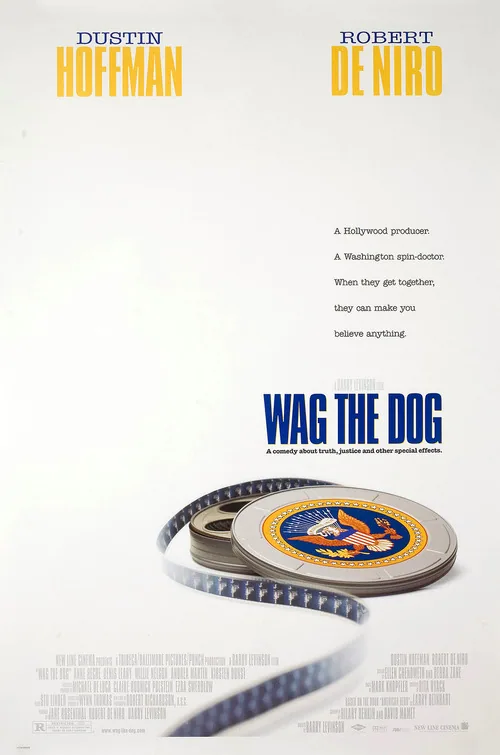
A political crisis becomes a media production in which a fictional war is assembled from repeatable images and a marketable narrative.
Why this matches +
These films explore a related idea in a different setting, genre or style.
An adjacent discovery: a related idea with a different viewing experience.
Genres: Drama / Comedy
The approach A dramatic feature rather than documentary footage.
Shared film traits
Based on recorded story, mood and style. Your preferences can change the order.
What changes A deliberately comic invented manipulation scheme replaces nonfiction testimony and direct wartime consequences.
With a presidential sex scandal threatening an election, political consultant Conrad Brean hires Hollywood producer Stanley Motss to invent a distant war that can redirect the news. Motss treats the crisis as a production problem, assembling images, slogans, music and a fictional hero with the same craft he would use for a movie. Brean manages government messaging while the fabricated conflict begins to acquire an independent life in the media. The film’s comedy comes from watching public belief depend on the details of a story that exists mainly because two professionals know how to stage it. As the campaign grows, it becomes less controllable, even for the people who made it. The satire targets both political spin and entertainment’s ability to make images feel like evidence.
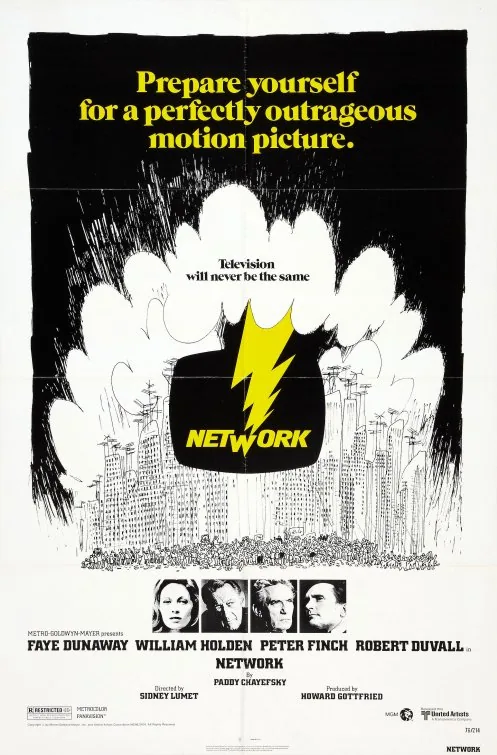
Ratings convert Beale's breakdown into a product, and every attempt to restore control becomes another negotiation between truth, profit and public appetite.
Why this matches +
These films explore a related idea in a different setting, genre or style.
An adjacent discovery: a related idea with a different viewing experience.
Genres: Drama / Comedy
The approach A dramatic feature rather than documentary footage.
Shared film traits
Based on recorded story, mood and style. Your preferences can change the order.
What changes Its own story: Ratings convert Beale's breakdown into a product, and every attempt to restore control becomes another negotiation between truth, profit and public appetite.
When veteran news anchor Howard Beale learns he will be dismissed, he announces on air that he will kill himself, then turns a farewell broadcast into an angry ratings sensation. Network executive Diana Christensen sells the outburst as entertainment, while division president Max Schumacher worries about the erosion of journalism and begins an affair with her. As Beale's populist persona grows, corporate leaders exploit his audience and eventually object when his message threatens a merger. The network answers a business problem with a lethal programming decision, turning the news division's cynicism into the plot's final spectacle.
Three simultaneous encounters test how policy, media, teaching, and soldiers' decisions connect to the war.
Why this matches +
These films explore a related idea in a different setting, genre or style.
An adjacent discovery: a related idea with a different viewing experience.
Genres: Drama / War
The approach A dramatic feature rather than documentary footage.
Shared film traits
Based on recorded story, mood and style. Your preferences can change the order.
War and civilian life
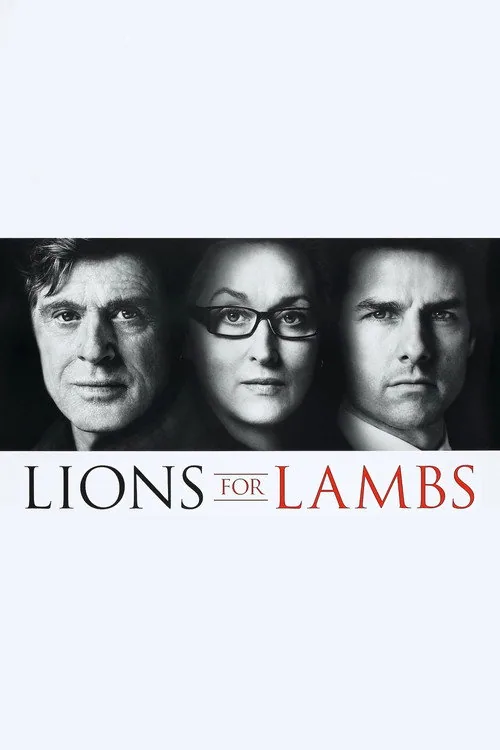
What changes Its own story: Three simultaneous encounters test how policy, media, teaching, and soldiers' decisions connect to the war.
A senator explains a new Afghanistan strategy to a skeptical television reporter while two young soldiers execute a dangerous mission on the ground. At a West Coast university, a professor tries to reach an apathetic student whose past choices intersect with those soldiers' enlistment. The three strands unfold over roughly the same period, linking policy, journalism, education, and combat. The political drama is structured around conversations and cross-cutting rather than action, asking how people justify participation or withdrawal from public life.
An analyst observes a secret detention while the detainee's wife searches for him and officials try to contain the case.
Why this matches +
These films explore a related idea in a different setting, genre or style.
An adjacent discovery: a related idea with a different viewing experience.
Genres: Drama / Thriller
The approach A dramatic feature rather than documentary footage.
Shared film traits
Based on recorded story, mood and style. Your preferences can change the order.
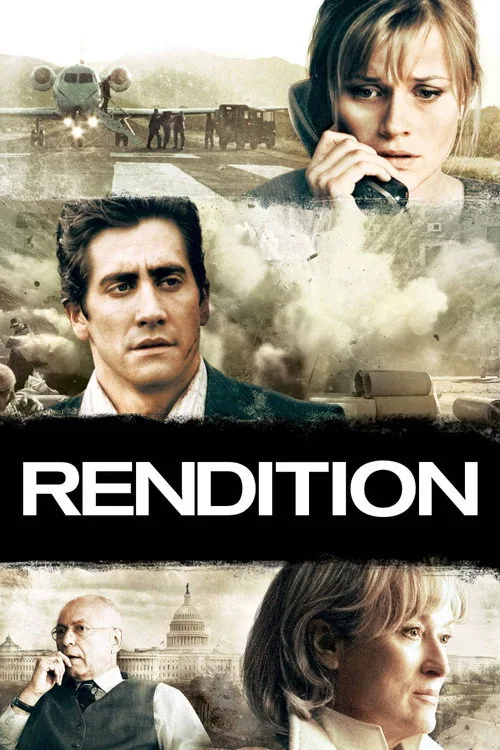
What changes Its own story: An analyst observes a secret detention while the detainee's wife searches for him and officials try to contain the case.
After a bombing in North Africa, Egyptian-born American engineer Anwar is detained during a flight and transferred to a secret interrogation site. His pregnant wife Isabella searches for answers in Washington while CIA analyst Douglas Freeman is assigned to observe the questioning and begins to doubt the process. A parallel story follows a young woman whose family is connected to the attack. The political thriller weaves these lives together to examine extraordinary rendition, torture, and the uncertain line between security work and abuse.
The oil merger links corporate maneuvering, state policy and local livelihoods, while no single character can see the whole chain of consequences.
Why this matches +
These films explore a related idea in a different setting, genre or style.
An adjacent discovery: a related idea with a different viewing experience.
Genres: Political thriller / Drama
The approach A dramatic feature rather than documentary footage.
Shared film traits
Based on recorded story, mood and style. Your preferences can change the order.
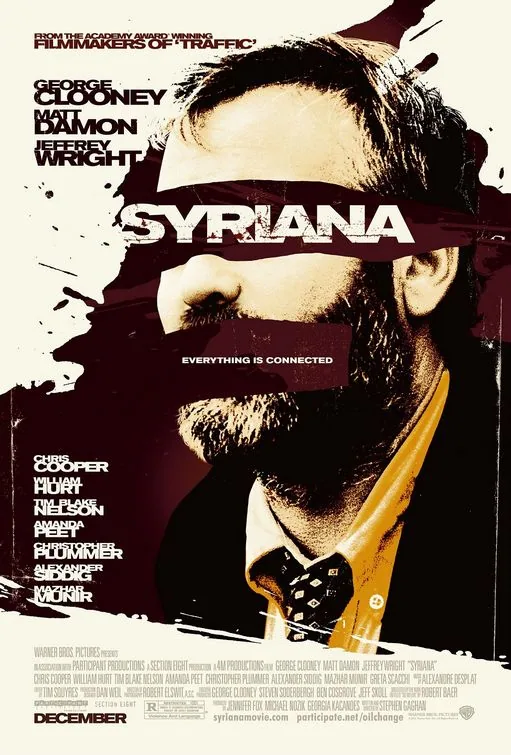
What changes Its own story: The oil merger links corporate maneuvering, state policy and local livelihoods, while no single character can see the whole chain of consequences.
A proposed oil-company merger, a Gulf royal succession and a covert CIA operation intersect across several countries. Energy analyst Bryan Woodman gains access to Prince Nasir after a family tragedy, lawyer Bennett Holiday manages the merger's legal risks, and officer Robert Barnes pursues a weapons investigation whose political consequences are unclear to him. At the same time, Pakistani migrant workers face economic hardship around the oil industry. The film moves between these lives to show how a decision made in one office can reshape distant communities.
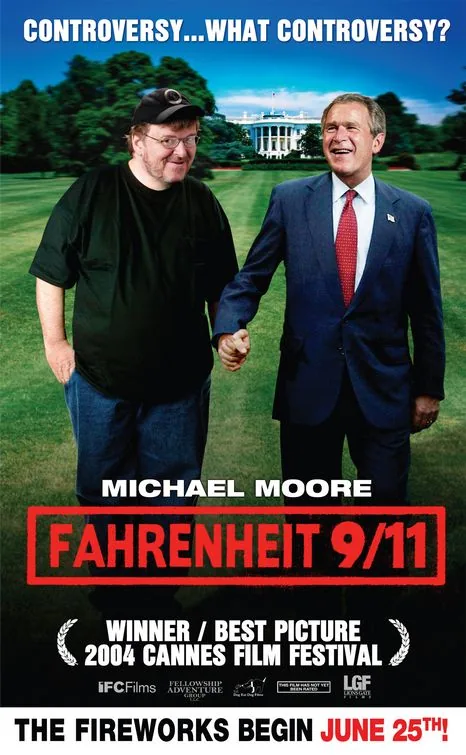
Michael Moore builds an openly adversarial argument from broadcast footage, interviews, archival images and public interventions, linking the Bush administration’s response to September 11 with the invasion of Iraq and the unequal distribution of wartime risk. The shifts between elite access, recruitment, military service and bereaved families make the film’s emotional movement as important as its allegations. Moore’s selection and narration are visible parts of the case: the documentary invites scrutiny of both the evidence it presents and the editorial connections through which it persuades.
What drives the story
The montage repeatedly moves from political decision-makers to people asked to enlist or grieve, turning questions of access and policy into questions of who bears consequences. The sequence from elite access to recruitment shifts the question from presidential intent to who carries the risk.
The people at its centre
Moore directs attention through his own confrontational persona, while officials, soldiers and families appear in unequal conditions of access; the mother’s account gives grief a perspective distinct from the satire. Moore’s visible authorship complicates the apparent immediacy of interviews and recorded broadcasts.
What it feels like
Television images, abrupt juxtapositions, humor and sustained testimony create an essayistic rhythm that shifts from ridicule toward mourning without surrendering the filmmaker’s polemical point of view. Abrupt edits make juxtaposition itself a source of pressure and skepticism.
Worth knowing
Compare with argumentative, archival antiwar documentaries, but separate recorded footage from the film’s editorial implications and verify consequential historical allegations independently rather than treating montage as proof. Keep its political efficacy separate from whether any individual allegation is independently verified.
PowerClassWar
Mood
Satirical · Confrontational · Grave
Pacing
Variable
Visual style
Documentary montage · Public interventions · Archival juxtaposition