Explore films connected to Manon des Sources through Memory and accountability, water and power, inheritance. Choose the qualities you want to carry into your next watch.
What should feel similar?
Find your next favourite
9 films · Closest overall matches
Hide films you’ve seen or don’t want. Saved on this device.
No matches for this combination yet.
Try another option or reset your choices to see more films.
Based on recorded story, mood and style. Your preferences can change the order.
Power and authority
What changes Manon des Sources: slow-burn reckoning, parallel romance, communal pressure and tragic resolution. Jean de Florette: measured seasonal progression, accumulating setbacks and restrained tragic climax.
In rural Provence after the First World War, Ugolin Soubeyran hopes to expand his flower-growing business with the help of his uncle César, known as Papet. Their plans depend on a spring hidden on neighboring land, but the owner refuses to sell. When his property passes to his city-born nephew Jean Cadoret, the two men conceal the water source and wait for the newcomer to fail. Jean arrives with his wife Aimée and daughter Manon, determined to farm despite his physical disability and lack of local experience. His persistence, the family’s mounting hardship and the villagers’ silence turn a land dispute into a slow tragedy about what greed can make a community accept.
Based on recorded story, mood and style. Your preferences can change the order.
What changes Manon des Sources: slow-burn reckoning, parallel romance, communal pressure and tragic resolution. The Last Duel: three-part and escalating.
In medieval France, Jean de Carrouges accuses Jacques Le Gris of assaulting his wife Marguerite, and the claim is brought before the king. The film retells the events through three perspectives, revealing where memory, status and self-justification reshape the same encounters. As legal and social institutions fail to offer Marguerite a safe hearing, the impending duel becomes both a public judgment and a violent test of whose account will be believed.
Based on recorded story, mood and style. Your preferences can change the order.
Memory and identity
What changes Manon des Sources: slow-burn reckoning, parallel romance, communal pressure and tragic resolution. Julia: nonlinear and measured.
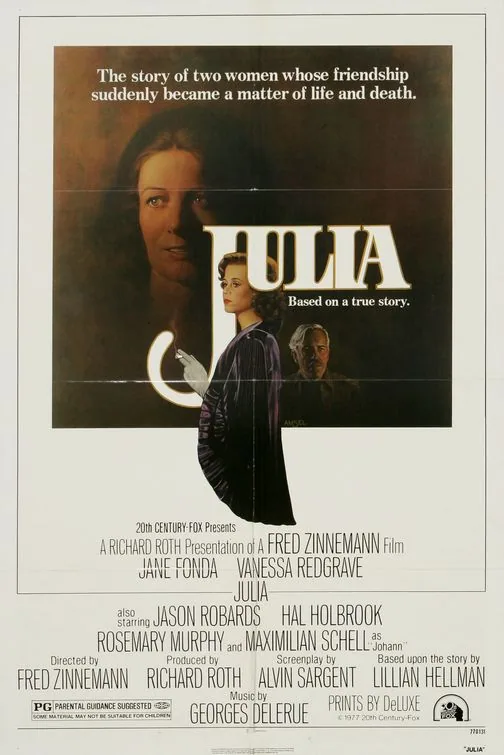
Playwright Lillian Hellman recalls her close friend Julia, whose anti-fascist work takes her into danger in Europe. In the film, Julia asks Hellman to carry money through Nazi Germany, a mission performed with limited information and little control over its outcome. Hellman’s earlier dependence on the older friend gives the journey emotional weight, but the brief reunion cannot restore their former intimacy or verify what became of Julia. The story is adapted from Hellman’s memoir Pentimento, whose account was challenged after publication; Muriel Gardiner said she recognized her own life in Julia, while Hellman denied that identification. The film’s elegant suspense therefore sits inside an unresolved question of memory and source identity, not a fully verified biography of a resistance courier.
Based on recorded story, mood and style. Your preferences can change the order.
Memory and identity
What changes Manon des Sources: slow-burn reckoning, parallel romance, communal pressure and tragic resolution. Malèna: episodic and measured.
In wartime Sicily, adolescent Renato watches Malèna, a young woman whose beauty makes her the subject of the town’s desire, gossip and punishment. He imagines a relationship with her but has little knowledge of her thoughts or access to the choices shaping her life. When her husband is reported dead and the war deepens, social protection falls away; the town first objectifies Malèna and then condemns her for the very attention it has imposed. Giuseppe Tornatore’s nostalgic narration and explicit scenes of cruelty place viewers inside Renato’s gaze while also exposing its limits. His late gesture is small beside the material vulnerability and communal violence she has endured. The film is not an equal romance or a simple fond memory of boyhood.
Based on recorded story, mood and style. Your preferences can change the order.
Power and authority · Social hierarchy
What changes Manon des Sources: slow-burn reckoning, parallel romance, communal pressure and tragic resolution. The Magdalene Sisters: daily routines and punishments and escape attempts reveal how the institution maintains control over its inmates.
In 1960s Ireland, Margaret, Bernadette, Rose and Crispina are sent by family or caretakers to a Magdalene laundry, where religious authorities claim to reform women considered sinful. Their work is exhausting, their freedom is restricted and the women face humiliation and abuse from the institution’s leadership. The film follows their attempts to endure the daily regime and preserve relationships with one another, while the asylum’s religious language masks a system that benefits from their labor and keeps them isolated from the outside world.
Based on recorded story, mood and style. Your preferences can change the order.
Memory and identity · Romance and intimacy
What changes Manon des Sources: slow-burn reckoning, parallel romance, communal pressure and tragic resolution. The Return of Martin Guerre: patient setup, evidence accumulates, trial-centered progression and late decisive testimony.
In sixteenth-century France, Martin Guerre leaves his wife Bertrande and their village to fight in a war. Years later, a man returns claiming to be Martin and is welcomed because he knows the household’s history and private details. Doubts surface when strangers identify him as Arnaud du Tilh, and a dispute over money with Martin’s uncle turns suspicion into a public trial. Bertrande’s testimony becomes pivotal as the community weighs memory and intimacy against reputation, kinship and legal evidence. The case travels to a higher court, where the returned husband’s identity carries consequences for the couple, their child and the village that accepted him.
Based on recorded story, mood and style. Your preferences can change the order.
Memory and identity · Romance and intimacy
What changes Manon des Sources: slow-burn reckoning, parallel romance, communal pressure and tragic resolution. Passing: a chance meeting renews the women’s friendship, clare enters irene’s social world and and shifting loyalties raise the risks of exposure..
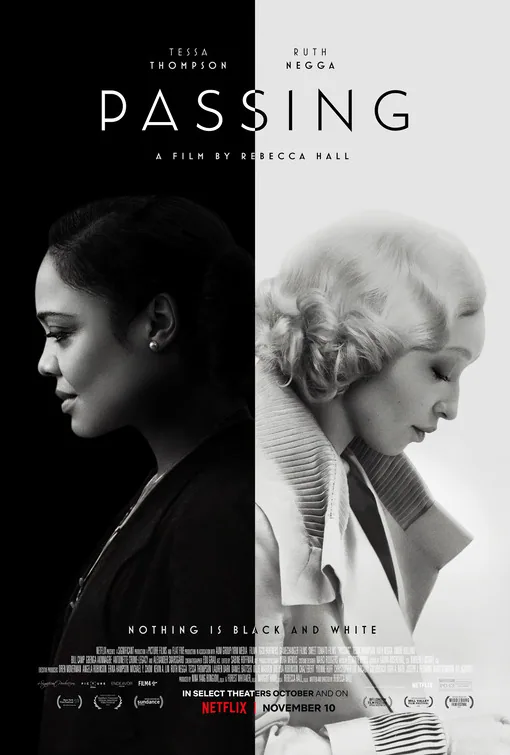
In 1920s New York, Irene Redfield encounters Clare Bellew, a childhood friend who has been living as white. Their renewed connection draws Clare back into Harlem society and into Irene’s household, while Irene becomes increasingly unsettled by Clare’s presence. Rebecca Hall’s adaptation follows the social codes, private desires and racial dangers that shape what each woman can reveal.
Based on recorded story, mood and style. Your preferences can change the order.
What changes Manon des Sources: slow-burn reckoning, parallel romance, communal pressure and tragic resolution. The 400 Blows: observational episodes and open-ended finish.
Antoine Doinel grows up in Paris feeling unwanted at home and misunderstood at school. Small acts of defiance, including truancy and a failed attempt to sell a stolen typewriter, draw him deeper into conflict with the adults who supervise him. His parents send him to a youth observation center, where a rare interview lets him speak about his life without interruption. Antoine escapes and runs toward the sea he has never seen, ending the film alone at the shoreline. The story follows a child's search for space and recognition rather than a neat reform narrative.
Based on recorded story, mood and style. Your preferences can change the order.
Romance and intimacy · Social hierarchy
What changes Manon des Sources: slow-burn reckoning, parallel romance, communal pressure and tragic resolution. Vermiglio: patient, seasonal and ensemble-led.
In the final winter of the Second World War, a Sicilian soldier arrives in the alpine village of Vermiglio and is taken in by a local family. His presence changes the lives of the household's daughters, especially Lucia, and draws private desires into the rhythms of village life. Maura Delpero observes the family across seasons as war, religion, work and social expectations shape what each generation can say aloud and what futures remain possible.
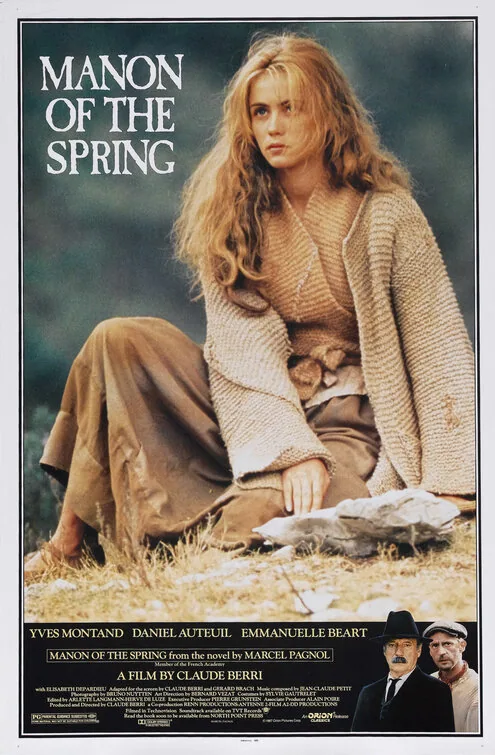
A decade after Jean Cadoret’s death, his daughter Manon lives on the hills above the Provençal village, tending goats and keeping her distance from the people below. She knows that Papet and Ugolin concealed the spring that could have saved her father’s farm, and that the village’s prosperity grew from that deception. When Manon discovers another source of water, she redirects it, forcing the villagers to confront how much they depend on what they once helped deny her family. As Ugolin’s attachment to her grows and a schoolteacher becomes her ally, Manon weighs private revenge against public truth. The film completes the two-part story begun in Jean de Florette.
What drives the story
Manon moves between solitude and the village, while Papet and Ugolin confront the consequences of the family they wronged.
The people at its centre
Ugolin’s longing cannot repair his complicity, while Manon and the schoolteacher form a relationship based on respect rather than ownership.
What it feels like
The spring returns as a test of collective memory: the village must acknowledge its role in Jean’s fate before it can claim moral restoration.
Worth knowing
A companion tragedy of revenge and recognition that completes Berri’s adaptation of Pagnol’s linked novels.
Memory and accountabilitywater and powerinheritance