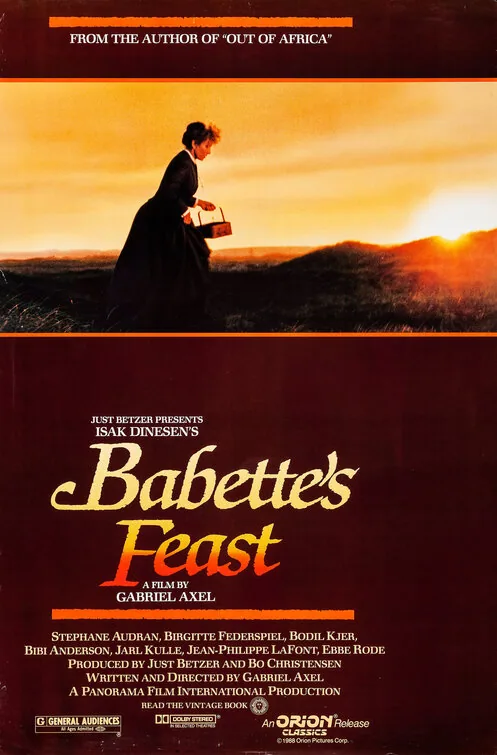
Babette uses a celebratory meal to offer generosity to a community wary of pleasure and worldly influence.
Why this matches +
These films share important themes, atmosphere or storytelling interests with this selection.
Genres: Drama
Shared film traits
Based on recorded story, mood and style. Your preferences can change the order.
What changes Its own story: Babette uses a celebratory meal to offer generosity to a community wary of pleasure and worldly influence.
In a remote Danish village, sisters Martine and Filippa live according to the strict religious values of their late father and the small congregation he founded. Their French housekeeper Babette, a refugee from political upheaval, unexpectedly wins a lottery and spends the money preparing an elaborate French dinner for the villagers. The meal challenges old resentments and habits, creating a rare occasion for pleasure, generosity, and reconciliation.
A domestic birthday gathering turns into an apocalyptic moral crisis, then into a question of whether a vow can carry meaning after the threat recedes.
Why this matches +
These films share important themes, atmosphere or storytelling interests with this selection.
Genres: Drama
Shared film traits
Based on recorded story, mood and style. Your preferences can change the order.
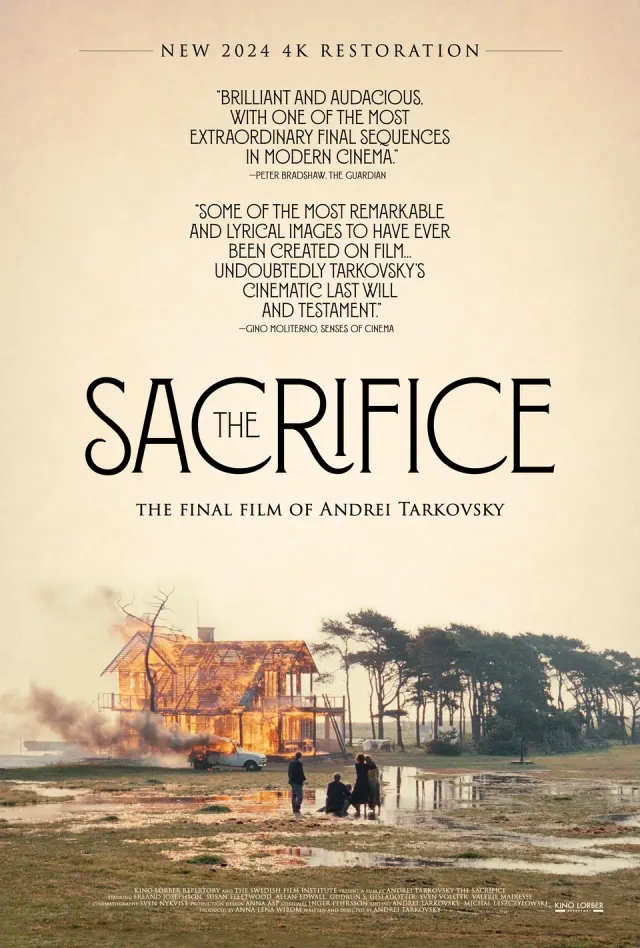
What changes Its own story: A domestic birthday gathering turns into an apocalyptic moral crisis, then into a question of whether a vow can carry meaning after the threat recedes.
On his birthday, former actor and writer Alexander gathers family and friends at a remote Swedish home, where he talks with his young son about spiritual life and the modern world. Low-flying aircraft and a broadcast announcement interrupt the celebration with news that a nuclear war may have begun. The adults react with panic and disbelief; Alexander responds by making a private vow that he will give up what he loves if the catastrophe is somehow undone. A postman with an interest in the inexplicable suggests a course of action involving the family's maid, Maria. By morning the threat appears to have passed, but Alexander's promise remains, and his decision to burn the house and withdraw from ordinary life leaves his family and the viewer confronting what his act means.
A ceremonial journey becomes a retrospective moral encounter as ordinary companions and remembered places unsettle the traveller's account of his own life.
Why this matches +
These films share important themes, atmosphere or storytelling interests with this selection.
Genres: Drama / Flashback
Shared film traits
Based on recorded story, mood and style. Your preferences can change the order.
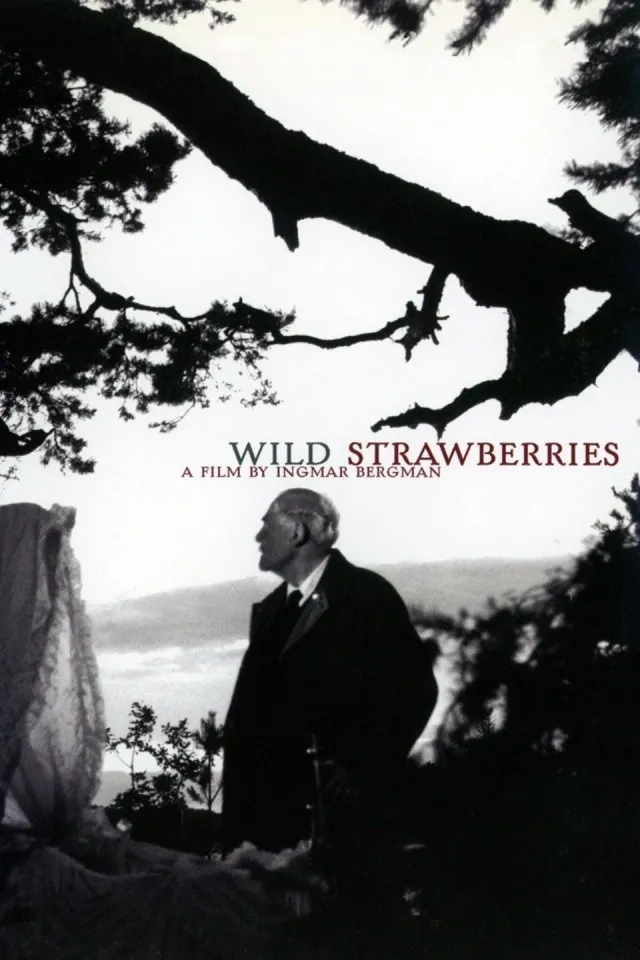
What changes Its own story: A ceremonial journey becomes a retrospective moral encounter as ordinary companions and remembered places unsettle the traveller's account of his own life.
An elderly physician travels by car to receive an academic honour, accompanied by a daughter-in-law whose strained marriage exposes the emotional habits he would prefer not to examine. Encounters with hitchhikers, family and places from his youth interrupt the outward journey with memories and unsettling dreams. Public recognition becomes less significant than the possibility of acknowledging how distance and self-protection have passed through generations of his household.
A delayed encounter with death creates a finite journey in which a search for certainty competes with the practical possibility of protecting others.
Why this matches +
These films share important themes, atmosphere or storytelling interests with this selection.
Genres: Fantasy / Drama
Shared film traits
Based on recorded story, mood and style. Your preferences can change the order.
What changes Its own story: A delayed encounter with death creates a finite journey in which a search for certainty competes with the practical possibility of protecting others.
A knight returning from the Crusades encounters Death in a country devastated by plague and proposes a chess game to postpone his end. Travelling with a sceptical squire, he searches for evidence of divine presence among fear, cruelty and ordinary acts of care. A family of travelling performers offers a form of fragile happiness that shifts the value of the remaining time from obtaining an answer toward making one useful intervention.
An adult revisits family memories and a sibling's death while the film places his private grief beside an immense cosmic history.
Why this matches +
These films share important themes, atmosphere or storytelling interests with this selection.
Genres: Drama / Coming-of-age
Shared film traits
Based on recorded story, mood and style. Your preferences can change the order.
What changes Its own story: An adult revisits family memories and a sibling's death while the film places his private grief beside an immense cosmic history.
Adult Jack reflects on his childhood in 1950s Texas, where his mother's warmth and his father's strict, ambitious parenting shaped his ideas about love and power. The memory of a family loss runs through his recollections, making ordinary moments of play, discipline and sibling rivalry feel charged with questions he could not answer as a child. The film moves between Jack's present, fragmented family memories and vast images of the universe's origins, placing private grief beside the scale of creation. Rather than offer a single explanatory account of the past, it lets images, music and recurrence carry much of the emotional argument. Jack's adult search is for a way to hold anger, love and absence together.
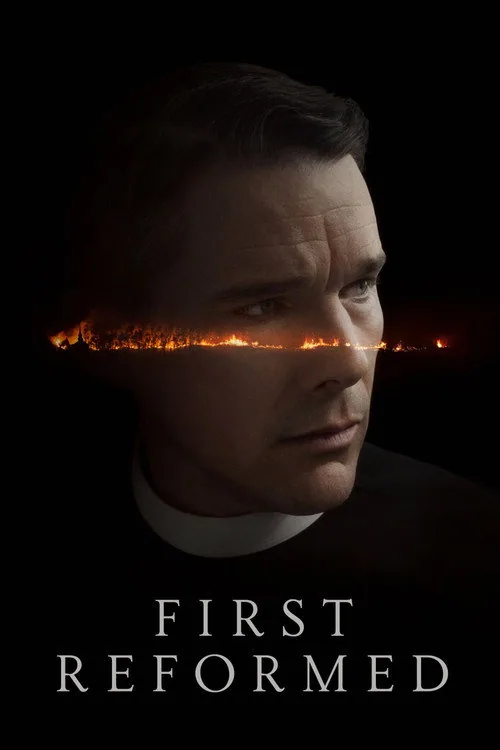
Toller’s counsel to a troubled couple intersects with his doubts about the church’s role in environmental harm.
Why this matches +
These films explore a related idea in a different setting, genre or style.
An adjacent discovery: a related idea with a different viewing experience.
Genres: Drama / Thriller
Shared film traits
Based on recorded story, mood and style. Your preferences can change the order.
What changes Its own story: Toller’s counsel to a troubled couple intersects with his doubts about the church’s role in environmental harm.
Reverend Ernst Toller is the pastor of a small historic church with few regular worshippers, living with grief and uncertainty about his faith. When a young environmental activist and his pregnant wife ask for counseling, Toller becomes involved in their fears about the future and the church’s relationship with a powerful corporate donor. Paul Schrader’s psychological drama follows Toller’s private writing, spiritual crisis, and growing sense of responsibility in a world he believes is in danger. Its restrained form turns pastoral routine into a tense study of conscience and despair.
Bereavement transfers the children into an authoritarian household, where legal and familial vulnerability makes rescue a collective act rather than a simple triumph of imagination. The father’s death changes household authority, making legal dependency part of the children’s danger.
Why this matches +
These films explore a related idea in a different setting, genre or style.
An adjacent discovery: a related idea with a different viewing experience.
Genres: Drama
Shared film traits
Based on recorded story, mood and style. Your preferences can change the order.
What changes Its own story: Bereavement transfers the children into an authoritarian household, where legal and familial vulnerability makes rescue a collective act rather than a simple triumph of imagination. The father’s death changes household authority, making legal dependency part of the children’s danger.
After their father dies, Fanny and Alexander move from the Ekdahl family’s theatrical, affectionate and imperfect home into the bishop’s rigid household. Alexander’s vivid imagination contests an authority that treats obedience as proof of virtue, while their mother’s marriage and the children’s vulnerability limit the protection she can provide. Their escape depends on an extended family whose earlier warmth should not be mistaken for innocence. Because Bergman released both a shorter theatrical version and a much longer television version, the balance between family life, punishment and uncanny perception changes with the cut being watched.
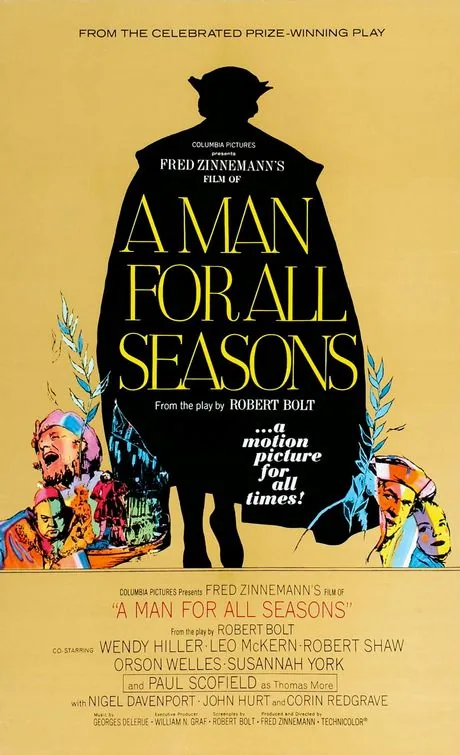
More uses resignation and legally guarded silence to avoid endorsing royal supremacy, but a state demanding explicit assent turns his refusal into a prosecution sustained by purchased testimony.
Why this matches +
These films explore a related idea in a different setting, genre or style.
An adjacent discovery: a related idea with a different viewing experience.
Genres: Drama / History
Shared film traits
Based on recorded story, mood and style. Your preferences can change the order.
What changes Its own story: More uses resignation and legally guarded silence to avoid endorsing royal supremacy, but a state demanding explicit assent turns his refusal into a prosecution sustained by purchased testimony.
Thomas More tries to retain both his conscience and legal safety as Henry VIII demands support for a new marriage and royal supremacy over the Church. Resigning and refusing to explain himself seem to preserve a narrow space in which he need not openly defy the king. As allies seek compromise and ambitious officials manufacture a case, silence becomes a test of whether law can protect private conviction when political authority requires a public declaration of loyalty.
The court uses questioning, deception and threat to make Joan renounce her mission; her recantation and withdrawal shape the movement toward execution.
Why this matches +
These films explore a related idea in a different setting, genre or style.
An adjacent discovery: a related idea with a different viewing experience.
Genres: Drama / Silent
Shared film traits
Based on recorded story, mood and style. Your preferences can change the order.
What changes Its own story: The court uses questioning, deception and threat to make Joan renounce her mission; her recantation and withdrawal shape the movement toward execution.
Captured near Compiègne, Joan of Arc is brought before a clerical court in Rouen, where judges loyal to the English seek to discredit her claim that God called her to drive the occupiers from France. Their questions move from doctrine to her visions, clothing and authority, turning the trial into a battle over who has the right to define her. Deception and threats of torture pressure Joan to sign a confession, but she later withdraws it and faces execution. Carl Theodor Dreyer compresses the historical proceedings into an intensely immediate ordeal, focusing on Joan's face and the reactions of the men judging her rather than recreating her military campaign. The film's emotional force comes from the conflict between institutional power and private conviction.
The journey begins as a defense of a mentor’s reputation, then exposes how missionary certainty can place vulnerable villagers in greater danger.
Why this matches +
These films explore a related idea in a different setting, genre or style.
An adjacent discovery: a related idea with a different viewing experience.
Genres: Historical drama / religious drama
Shared film traits
Based on recorded story, mood and style. Your preferences can change the order.
What changes Its own story: The journey begins as a defense of a mentor’s reputation, then exposes how missionary certainty can place vulnerable villagers in greater danger.
In the seventeenth century, Jesuit priests Rodrigues and Garupe travel to Japan after hearing that their mentor Ferreira has renounced Christianity. They rely on Kichijiro, a fisherman who repeatedly professes and abandons the faith under pressure. The priests find secret Christian communities, but authorities force villagers to choose between public apostasy and brutal punishment. Separated from Garupe and imprisoned, Rodrigues must confront what belief means when his own presence exposes others to suffering. The search for Ferreira becomes a moral test rather than a simple rescue mission.
A terminal diagnosis redirects a passive official toward one neglected civic project, then a posthumous inquiry asks whether colleagues can maintain the change he began. Building the playground is a modest civic achievement whose meaning changes after Watanabe can no longer explain it.
Why this matches +
These films explore a related idea in a different setting, genre or style.
An adjacent discovery: a related idea with a different viewing experience.
Genres: Drama
Shared film traits
Based on recorded story, mood and style. Your preferences can change the order.
What changes Its own story: A terminal diagnosis redirects a passive official toward one neglected civic project, then a posthumous inquiry asks whether colleagues can maintain the change he began. Building the playground is a modest civic achievement whose meaning changes after Watanabe can no longer explain it.
Municipal clerk Kanji Watanabe learns that he is dying after decades of routine work and first tries to use nightlife to fill the time he has left. A younger colleague’s vitality shows him what he has been missing, but purpose takes practical form when he presses the city to build a playground requested by neighborhood residents. After his death, the film shifts to coworkers reconstructing his actions and gradually losing resolve to change their own habits. This two-part structure makes the project meaningful without promising institutional reform: what Watanabe achieved can be acknowledged, misunderstood and absorbed by the bureaucracy he briefly moved.
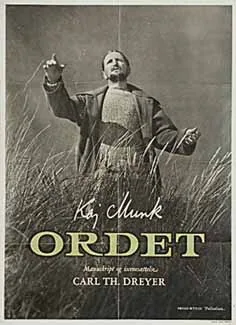
On a Danish farm, Morten Borgen and his sons disagree about religion, reason and family obligations. One son believes himself to be Jesus, another has lost his faith, and the youngest hopes to marry a woman whose father follows a rival religious community. As disputes over belief intersect with illness and childbirth, the family faces a crisis that tests what faith means to each of them.
What drives the story
Religious differences divide a farming family and neighboring households until a domestic crisis demands a response beyond argument.
The people at its centre
The Borgen brothers embody different relationships to belief, while a contested marriage exposes tensions between their fathers.
What it feels like
Long, carefully composed scenes build a serious family drama in which spiritual conviction and ordinary care remain intertwined.
Worth knowing
The supernatural question is approached through religious and familial experience, not through a conventional horror investigation.
FaithFamily conflictLove
Mood
Contemplative · Solemn · Transcendent
Pacing
Measured · Patient
Visual style
Black-and-white cinematography · Long takes
Storytelling
Religious disagreement · Family crisis · Forbidden marriage