Personal stories of denied care are set against other national systems to challenge what Americans accept as inevitable.
Why this matches +
These films share important themes, atmosphere or storytelling interests with this selection.
Genres: Documentary
Shared film traits
Based on recorded story, mood and style. Your preferences can change the order.
Political resistance · Investigation
What changes Its own story: Personal stories of denied care are set against other national systems to challenge what Americans accept as inevitable.
Michael Moore examines the American health-care system by comparing personal accounts of denied treatment and financial hardship with systems in other countries. The documentary follows patients, workers and institutions to make access to care a public question rather than a private misfortune. Its arguments are presented through interviews, staged visits and pointed contrasts, blending advocacy with humor while asking who bears responsibility when illness meets bureaucracy.
Moore’s interviews and contrasts test competing explanations for the prevalence of gun violence.
Why this matches +
These films share important themes, atmosphere or storytelling interests with this selection.
Genres: Documentary
Shared film traits
Based on recorded story, mood and style. Your preferences can change the order.
Political resistance · Investigation
What changes Its own story: Moore’s interviews and contrasts test competing explanations for the prevalence of gun violence.
Michael Moore assembles interviews, news material and pointed juxtapositions to investigate gun violence and gun culture in the United States. The film begins with the Columbine school shooting but widens its inquiry toward fear, media narratives, history and public policy. Its argumentative documentary form invites viewers to consider how evidence and framing shape explanations of violence rather than offering a detached survey.
The montage repeatedly moves from political decision-makers to people asked to enlist or grieve, turning questions of access and policy into questions of who bears consequences. The sequence from elite access to recruitment shifts the question from presidential intent to who carries the risk.
Why this matches +
These films share important themes, atmosphere or storytelling interests with this selection.
Genres: Documentary
Shared film traits
Based on recorded story, mood and style. Your preferences can change the order.
What changes Its own story: The montage repeatedly moves from political decision-makers to people asked to enlist or grieve, turning questions of access and policy into questions of who bears consequences. The sequence from elite access to recruitment shifts the question from presidential intent to who carries the risk.
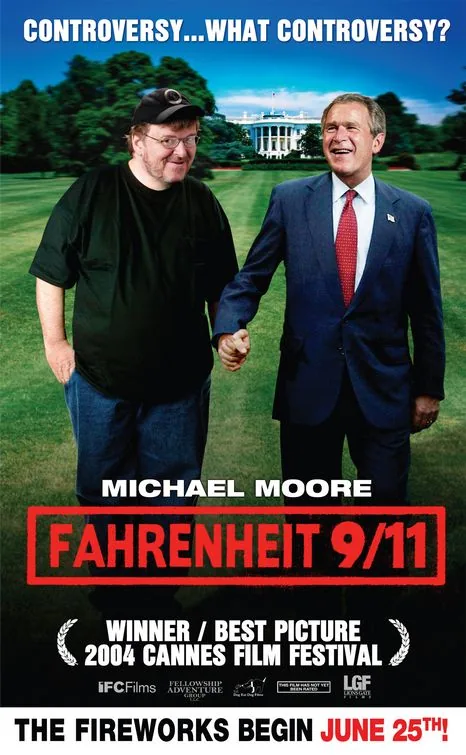
Michael Moore builds an openly adversarial argument from broadcast footage, interviews, archival images and public interventions, linking the Bush administration’s response to September 11 with the invasion of Iraq and the unequal distribution of wartime risk. The shifts between elite access, recruitment, military service and bereaved families make the film’s emotional movement as important as its allegations. Moore’s selection and narration are visible parts of the case: the documentary invites scrutiny of both the evidence it presents and the editorial connections through which it persuades.
A single successful lie gives Mark a tool that reshapes his finances, his social standing, and how people explain death.
Why this matches +
These films share important themes, atmosphere or storytelling interests with this selection.
Genres: Comedy / Fantasy
The approach A dramatic feature rather than documentary footage.
Shared film traits
Based on recorded story, mood and style. Your preferences can change the order.
What changes Its own story: A single successful lie gives Mark a tool that reshapes his finances, his social standing, and how people explain death.
In a world where everyone speaks only the literal truth, screenwriter Mark Bellison discovers that he can lie. At first he uses the new ability to solve personal problems, then to comfort his dying mother; his invention of a promised afterlife turns a private deception into a public belief system. As Mark becomes wealthy and influential, his feelings for Anna force him to consider whether honesty matters most when it cannot guarantee the answer he wants.
A promised religious exemption becomes a cosmic contradiction, requiring an uncertain believer to stop people whose personal claim to forgiveness threatens everyone else's continued existence.
Why this matches +
These films share important themes, atmosphere or storytelling interests with this selection.
Genres: Comedy / Fantasy
The approach A dramatic feature rather than documentary footage.
Shared film traits
Based on recorded story, mood and style. Your preferences can change the order.
What changes Its own story: A promised religious exemption becomes a cosmic contradiction, requiring an uncertain believer to stop people whose personal claim to forgiveness threatens everyone else's continued existence.
Two banished angels discover a church ceremony that appears to offer a route back to Heaven, but exploiting its promise would contradict the divine order on which existence depends. A woman struggling with her own faith is sent to prevent them, accompanied by unlikely helpers whose appearances challenge institutional expectations of holiness. Their journey makes doctrinal loopholes, personal resentment and the need for human connection parts of the same comic dispute over belief. Its premise makes religious loopholes literal, but the comedy retains emotional seriousness about belief and exclusion.
Mary's pregnancy after trying to change her boyfriend exposes the gap between her school's public moral code and its behavior.
Why this matches +
These films share important themes, atmosphere or storytelling interests with this selection.
Genres: Comedy / Drama
The approach A dramatic feature rather than documentary footage.
Shared film traits
Based on recorded story, mood and style. Your preferences can change the order.
What changes Its own story: Mary's pregnancy after trying to change her boyfriend exposes the gap between her school's public moral code and its behavior.
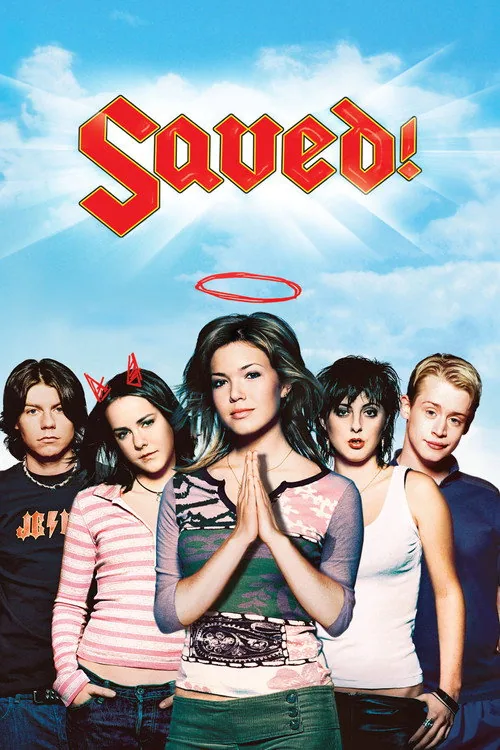
At a conservative Christian high school, devout senior Mary believes a vision has instructed her to help her boyfriend Dean, who confides that he may be gay. Her attempt to change him leaves her pregnant and increasingly isolated from the school's popular Christian group. As Mary faces judgment and the possibility of raising a child, she finds unexpected support from outsiders and begins to question how faith, compassion, and social status are being used around her.
The documentary traces common food products through industrial production systems and asks how corporate practices affect workers, consumers, and the environment.
Why this matches +
These films explore a related idea in a different setting, genre or style.
An adjacent discovery: a related idea with a different viewing experience.
Genres: Documentary
Shared film traits
Based on recorded story, mood and style. Your preferences can change the order.
Political resistance · Investigation
What changes Its own story: The documentary traces common food products through industrial production systems and asks how corporate practices affect workers, consumers, and the environment.
This documentary examines the industrial food system in the United States, moving from large-scale meat production to grain and vegetable farming and the companies that control much of the supply chain. Interviews with writers, farmers, workers, and advocates consider how corporate efficiency affects food quality, animal welfare, labor, the environment, and consumer choice. The film links everyday supermarket products to hidden production practices and asks viewers to consider how regulation, purchasing habits, and concentrated corporate power shape what people eat.
Jerry's private encounters with God become public when he attempts to share a message and faces growing skepticism.
Why this matches +
These films explore a related idea in a different setting, genre or style.
An adjacent discovery: a related idea with a different viewing experience.
Genres: Comedy / Fantasy
The approach A dramatic feature rather than documentary footage.
Shared film traits
Based on recorded story, mood and style. Your preferences can change the order.
What changes Its own story: Jerry's private encounters with God become public when he attempts to share a message and faces growing skepticism.
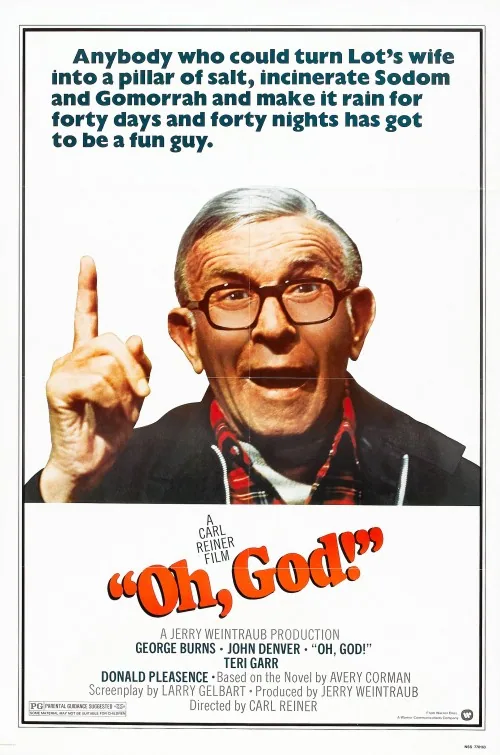
Jerry Landers, an ordinary assistant supermarket manager, is chosen by God to carry a simple message to the modern world. Jerry's attempts to tell his wife, family and a newspaper editor about the encounters turn him into a public curiosity and a target of religious skeptics. As theologians challenge him to prove the experience, Jerry must decide how to express the message without turning it into a spectacle. The film balances domestic comedy with a gentle debate about faith and responsibility.
The missing remote and Jaggu’s lost relationship both depend on messages being misread or deliberately manipulated, connecting comedy to religious authority.
Why this matches +
These films explore a related idea in a different setting, genre or style.
An adjacent discovery: a related idea with a different viewing experience.
Genres: Comedy / Drama
The approach A dramatic feature rather than documentary footage.
Shared film traits
Based on recorded story, mood and style. Your preferences can change the order.
Political resistance
What changes Its own story: The missing remote and Jaggu’s lost relationship both depend on messages being misread or deliberately manipulated, connecting comedy to religious authority.
A humanoid alien lands in Rajasthan on a research mission, but a thief steals the amulet that lets him contact his spacecraft. In New Delhi, television reporter Jaggu encounters the stranded visitor, nicknamed PK, as he searches for a God who can recover the device. Her own heartbreak began when an unsigned note ended her relationship with Sarfaraz, a Pakistani student, after a godman predicted he would betray her. PK’s questions about religious authorities draw attention to the amulet and expose how a fabricated message separated the couple. A televised confrontation challenges the godman’s claims, while PK’s affection for Jaggu remains unreturned.
Xi’s journey to remove a disruptive object gives the comedy a simple quest, while the separate white characters’ troubles create a parallel farce.
Why this matches +
These films explore a related idea in a different setting, genre or style.
An adjacent discovery: a related idea with a different viewing experience.
Genres: Action / Adventure
The approach A dramatic feature rather than documentary footage.
Shared film traits
Based on recorded story, mood and style. Your preferences can change the order.
What changes Its own story: Xi’s journey to remove a disruptive object gives the comedy a simple quest, while the separate white characters’ troubles create a parallel farce.
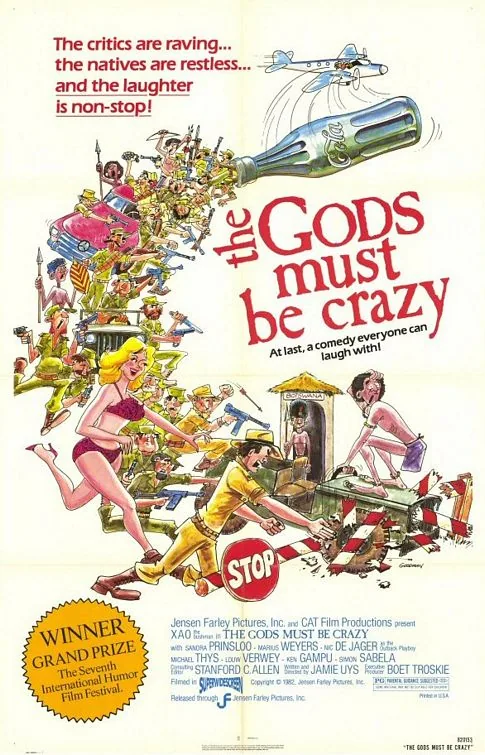
A glass Coca-Cola bottle dropped from an aircraft lands among a San community and becomes an object of dispute because nobody has encountered anything like it. Xi decides to return it to the gods at the edge of the world, while a white schoolteacher, a revolutionary group and a bumbling naturalist set out on intersecting adventures. The film cuts between these storylines for broad physical comedy, but its portrayal of San life is shaped by an outsider fantasy that turns a living people into an untouched foil for modern society. That tension matters when deciding whether the film’s satire feels playful or patronizing.
Former technology insiders describe how platforms capture attention and predict behavior; a fictional family illustrates possible effects on users.
Why this matches +
These films explore a related idea in a different setting, genre or style.
An adjacent discovery: a related idea with a different viewing experience.
Genres: Documentary / Drama
Shared film traits
Based on recorded story, mood and style. Your preferences can change the order.
What changes Its own story: Former technology insiders describe how platforms capture attention and predict behavior; a fictional family illustrates possible effects on users.
This documentary combines interviews with former technology employees and researchers with a fictional story about a family shaped by social media. Interviewees discuss persuasive design, behavioral data, recommendation systems, advertising, misinformation, and platform incentives. The dramatized family illustrates how a teenager’s engagement can affect attention, mood, and political beliefs. Jeff Orlowski’s film makes a case about technology’s social costs, using testimony and scripted scenes to present its argument.
A restless veteran enters the orbit of a movement leader whose confidence both attracts and confines him.
Why this matches +
These films explore a related idea in a different setting, genre or style.
An adjacent discovery: a related idea with a different viewing experience.
Genres: Drama
The approach A dramatic feature rather than documentary footage.
Shared film traits
Based on recorded story, mood and style. Your preferences can change the order.
What changes Its own story: A restless veteran enters the orbit of a movement leader whose confidence both attracts and confines him.
After World War II, troubled sailor Freddie Quell drifts through jobs and encounters Lancaster Dodd, the charismatic leader of a movement called The Cause. Dodd draws Freddie into its community and methods of self-examination, but Freddie's resistance and volatility unsettle the group's claims to authority. Paul Thomas Anderson's drama studies power, belief and the uneasy bond between a volatile follower and an assured guide.
Toller’s counsel to a troubled couple intersects with his doubts about the church’s role in environmental harm.
Why this matches +
These films explore a related idea in a different setting, genre or style.
An adjacent discovery: a related idea with a different viewing experience.
Genres: Drama / Thriller
The approach A dramatic feature rather than documentary footage.
Shared film traits
Based on recorded story, mood and style. Your preferences can change the order.
Political resistance
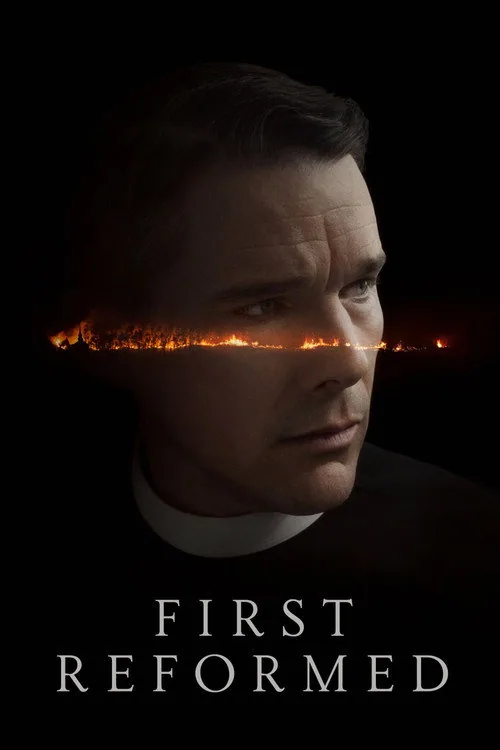
What changes Its own story: Toller’s counsel to a troubled couple intersects with his doubts about the church’s role in environmental harm.
Reverend Ernst Toller is the pastor of a small historic church with few regular worshippers, living with grief and uncertainty about his faith. When a young environmental activist and his pregnant wife ask for counseling, Toller becomes involved in their fears about the future and the church’s relationship with a powerful corporate donor. Paul Schrader’s psychological drama follows Toller’s private writing, spiritual crisis, and growing sense of responsibility in a world he believes is in danger. Its restrained form turns pastoral routine into a tense study of conscience and despair.
A structured public presentation moves from climate evidence to consequences and a call for action, while personal and political recollections explain why Gore has taken up the campaign. The lecture is the film's main organizing device.
Why this matches +
These films explore a related idea in a different setting, genre or style.
An adjacent discovery: a related idea with a different viewing experience.
Genres: Documentary
Shared film traits
Based on recorded story, mood and style. Your preferences can change the order.
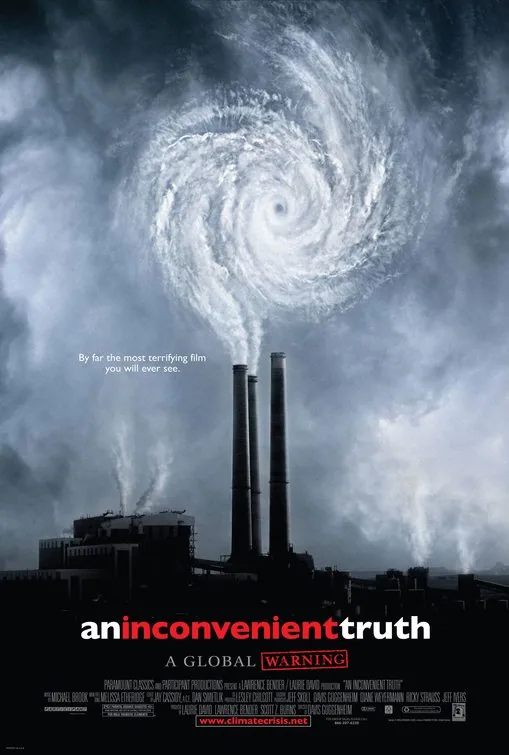
What changes Its own story: A structured public presentation moves from climate evidence to consequences and a call for action, while personal and political recollections explain why Gore has taken up the campaign. The lecture is the film's main organizing device.
Al Gore presents a lecture on climate change, explaining the evidence for human-caused warming through charts, photographs and projections while the film places the presentation alongside episodes from his political and personal life. The lecture's visual explanations are designed to make a large-scale, long-term problem legible to an audience, and its campaigning form makes persuasion part of the documentary's subject. Its 2006 claims should be read as a dated intervention in climate communication, not as the latest scientific assessment. The film asks viewers to connect evidence with civic responsibility, while leaving the limits of individual action in view.
Suspicion leads a school leader to confront a more institutionally protected colleague, making the demand to act before proof collides with the risk of mistaking conviction for knowledge. A limited set of observations is interpreted by people with unequal authority and incompatible ideas of protection.
Why this matches +
These films explore a related idea in a different setting, genre or style.
An adjacent discovery: a related idea with a different viewing experience.
Genres: Drama
The approach A dramatic feature rather than documentary footage.
Shared film traits
Based on recorded story, mood and style. Your preferences can change the order.
What changes Its own story: Suspicion leads a school leader to confront a more institutionally protected colleague, making the demand to act before proof collides with the risk of mistaking conviction for knowledge. A limited set of observations is interpreted by people with unequal authority and incompatible ideas of protection.
At a Bronx Catholic school in 1964, a principal becomes convinced that a priest's relationship with a vulnerable student conceals misconduct. A younger teacher's observations provide troubling signs without a settled explanation, while the boy's mother faces dangers that do not fit the principal's preferred moral choices. Institutional rank and the fear of failing a child turn a dispute over evidence into an encounter with the cost of certainty, without supplying a definitive account of what occurred.
A local allegation expands into an investigation of systematic concealment, requiring documentary proof of institutional knowledge rather than another isolated accusation.
Why this matches +
These films explore a related idea in a different setting, genre or style.
An adjacent discovery: a related idea with a different viewing experience.
Genres: Drama / Biography
The approach A dramatic feature rather than documentary footage.
Shared film traits
Based on recorded story, mood and style. Your preferences can change the order.
Investigation
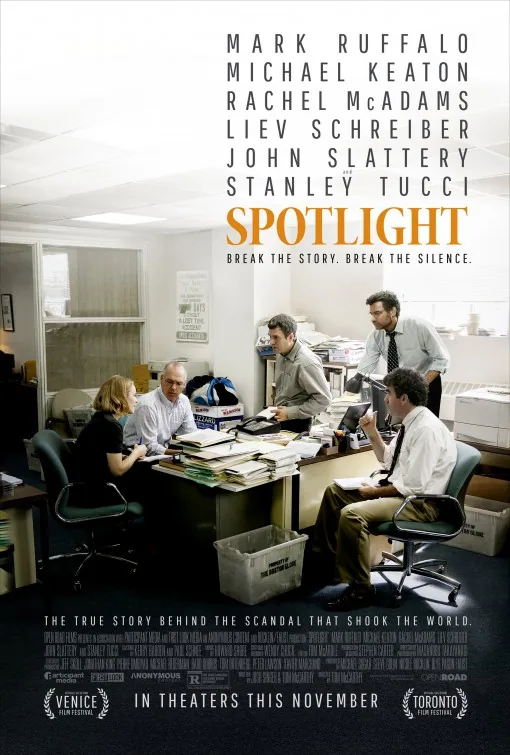
What changes Its own story: A local allegation expands into an investigation of systematic concealment, requiring documentary proof of institutional knowledge rather than another isolated accusation.
A newspaper's investigative team begins examining allegations against a Boston priest and encounters a pattern extending far beyond an individual offence. Reporters work through court records, reluctant witnesses and professional networks while institutional resistance repeatedly narrows what can be made public. The inquiry also forces them to confront how their own organisation previously missed opportunities to act, making publication a test of collective responsibility as well as evidentiary persistence.
The documentary traces how regulatory choices and financial practices helped generate the crisis, then examines who benefited and who faced consequences.
Why this matches +
These films explore a related idea in a different setting, genre or style.
An adjacent discovery: a related idea with a different viewing experience.
Genres: Documentary / History
Shared film traits
Based on recorded story, mood and style. Your preferences can change the order.
Political resistance · Investigation
What changes Its own story: The documentary traces how regulatory choices and financial practices helped generate the crisis, then examines who benefited and who faced consequences.
Charles Ferguson’s documentary investigates the 2008 global financial crisis and the decisions that helped create it. Organized in five parts, it moves from deregulation and financial innovation through the housing bubble, institutional collapse, bailouts, and questions of accountability. Interviews with officials, executives, economists, and journalists are combined with narration and data to explain complex systems in accessible terms. Rather than focusing on one household or firm, the film argues that conflicts of interest and policy choices across an interconnected industry had consequences for workers, borrowers, and national economies.
A resignation request becomes an extended two-person negotiation over whether an institution can change and what its leaders owe it.
Why this matches +
These films explore a related idea in a different setting, genre or style.
An adjacent discovery: a related idea with a different viewing experience.
Genres: Drama / Biography
The approach A dramatic feature rather than documentary footage.
Shared film traits
Based on recorded story, mood and style. Your preferences can change the order.
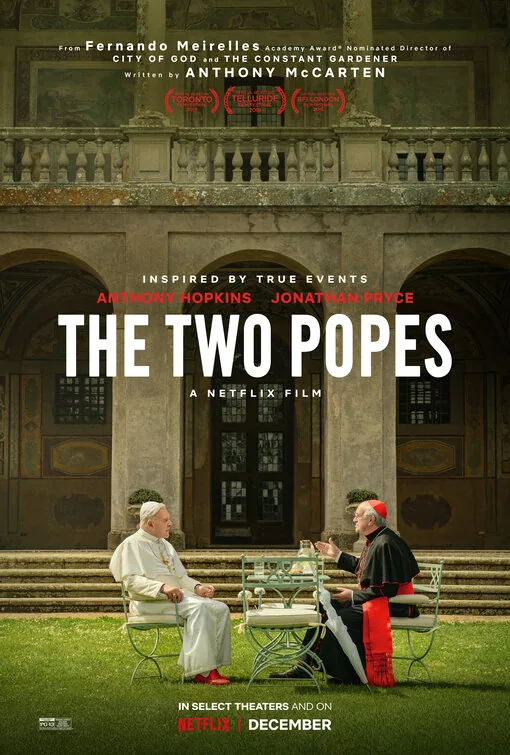
What changes Its own story: A resignation request becomes an extended two-person negotiation over whether an institution can change and what its leaders owe it.
The film frames Cardinal Jorge Bergoglio’s 2012 trip to Rome as a request to retire from his role in Buenos Aires. Pope Benedict XVI instead summons him into an imagined private conversation about faith, institutional change and the failures each man sees in himself. Their differing temperaments produce candid disagreement as well as humor, food and personal confession. The real transition is that Benedict resigned in 2013 and Bergoglio was elected pope; the film’s extended meetings and dialogue are fictionalized, not a transcript or reconstruction. Its intimate two-hander uses the historical moment to examine how leaders respond when an institution faces crisis.
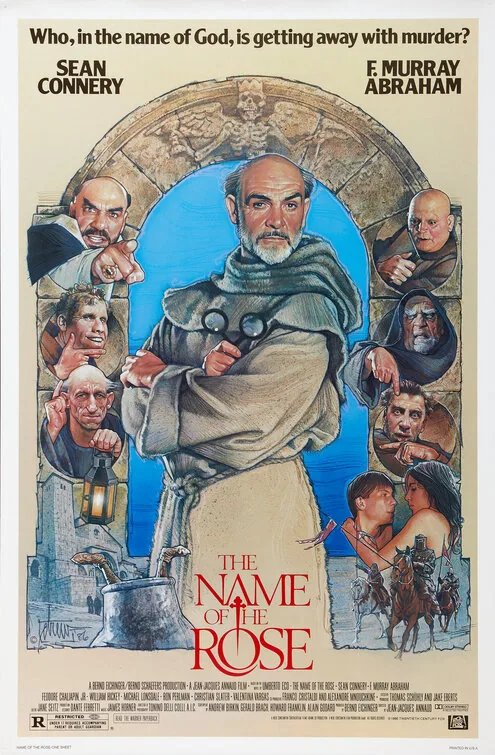
Repeated deaths lead an investigator toward controlled access to books while an institutional inquiry threatens to replace evidence with ideological certainty.
Why this matches +
These films explore a related idea in a different setting, genre or style.
An adjacent discovery: a related idea with a different viewing experience.
Genres: Crime / Drama
The approach A dramatic feature rather than documentary footage.
Shared film traits
Based on recorded story, mood and style. Your preferences can change the order.
Investigation
What changes Its own story: Repeated deaths lead an investigator toward controlled access to books while an institutional inquiry threatens to replace evidence with ideological certainty.
A Franciscan friar and his novice arrive at a remote medieval abbey for a theological gathering and begin investigating a monk's death. Further deaths make the library's restricted knowledge and the community's concealed desires increasingly consequential. With an inquisitor approaching, the friar's reliance on observation competes with authorities ready to impose an explanation that protects doctrine and punishes convenient suspects.
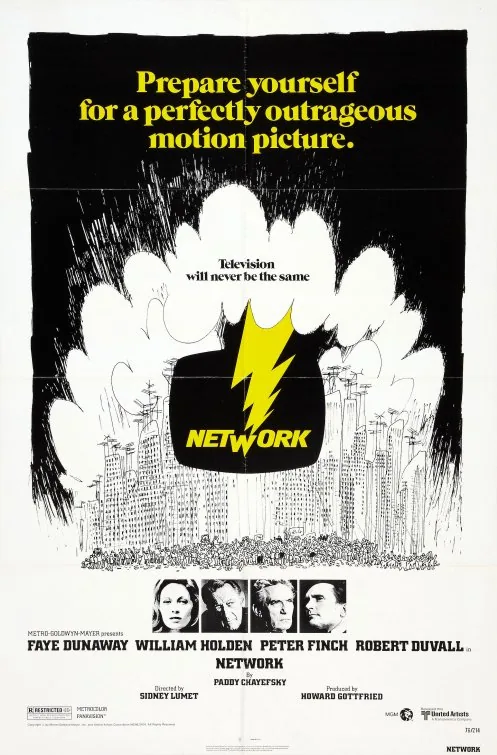
Ratings convert Beale's breakdown into a product, and every attempt to restore control becomes another negotiation between truth, profit and public appetite.
Why this matches +
These films explore a related idea in a different setting, genre or style.
An adjacent discovery: a related idea with a different viewing experience.
Genres: Drama / Comedy
The approach A dramatic feature rather than documentary footage.
Shared film traits
Based on recorded story, mood and style. Your preferences can change the order.
What changes Its own story: Ratings convert Beale's breakdown into a product, and every attempt to restore control becomes another negotiation between truth, profit and public appetite.
When veteran news anchor Howard Beale learns he will be dismissed, he announces on air that he will kill himself, then turns a farewell broadcast into an angry ratings sensation. Network executive Diana Christensen sells the outburst as entertainment, while division president Max Schumacher worries about the erosion of journalism and begins an affair with her. As Beale's populist persona grows, corporate leaders exploit his audience and eventually object when his message threatens a merger. The network answers a business problem with a lethal programming decision, turning the news division's cynicism into the plot's final spectacle.
Comedian Bill Maher travels to religious sites and communities around the world, speaking with believers, clergy, and skeptics about faith and religious institutions. The interviews range from Christianity and Judaism to Islam and other traditions, often using irony to challenge claims about doctrine, history, and certainty. Larry Charles's documentary is openly polemical: it invites disagreement as part of its form and approaches religion through satire rather than detached observational reporting.
What drives the story
Maher visits religious communities and interviews adherents to challenge belief and institutional claims through pointed questions.
The people at its centre
The host's skeptical posture shapes each exchange, while guests differ in how directly they answer or contest his framing.
What it feels like
A debate-driven documentary mixes travel, interviews, and satire into an openly argumentative essay.
Worth knowing
It presents a comedian's critique of organized religion rather than a balanced survey or neutral ethnographic study.
faith and skepticismreligious authoritybelief in public life