Personal crises among a worker and her employers reveal the unequal labour sustaining a shared household.
Why this matches +
These films share important themes, atmosphere or storytelling interests with this selection.
Genres: Drama
Shared film traits
Based on recorded story, mood and style. Your preferences can change the order.
What changes Its own story: Personal crises among a worker and her employers reveal the unequal labour sustaining a shared household.
A domestic worker cares for a middle-class family in Mexico City while her own relationship exposes her to abandonment and uncertainty. Changes in the employers' marriage unfold alongside her pregnancy and the political tensions surrounding the household. Work, affection and class hierarchy remain inseparable as she supports children whose dependence on her does not erase the unequal conditions of their bond.
NJ’s attempt to revisit a decision from his youth unfolds alongside the demands of his present family.
Why this matches +
These films share important themes, atmosphere or storytelling interests with this selection.
Genres: Drama
Shared film traits
Based on recorded story, mood and style. Your preferences can change the order.
What changes Its own story: NJ’s attempt to revisit a decision from his youth unfolds alongside the demands of his present family.
Over the course of a year in Taipei, the middle-class Jian family faces a wedding, a grandmother’s stroke, business troubles and the strains of ordinary family life. Father NJ reconnects with a former love while negotiating a new business deal; his wife Min-Min leaves for a Buddhist retreat; daughter Ting-Ting navigates adolescent relationships; and young Yang-Yang observes the adults with unusual curiosity. Each family member sees only part of the whole, and the film follows how private choices ripple through the household and its wider community.
A visit by elderly parents exposes the distance between generations as their adult children balance affection with urban routines and obligations.
Why this matches +
These films share important themes, atmosphere or storytelling interests with this selection.
Genres: Drama
Shared film traits
Based on recorded story, mood and style. Your preferences can change the order.
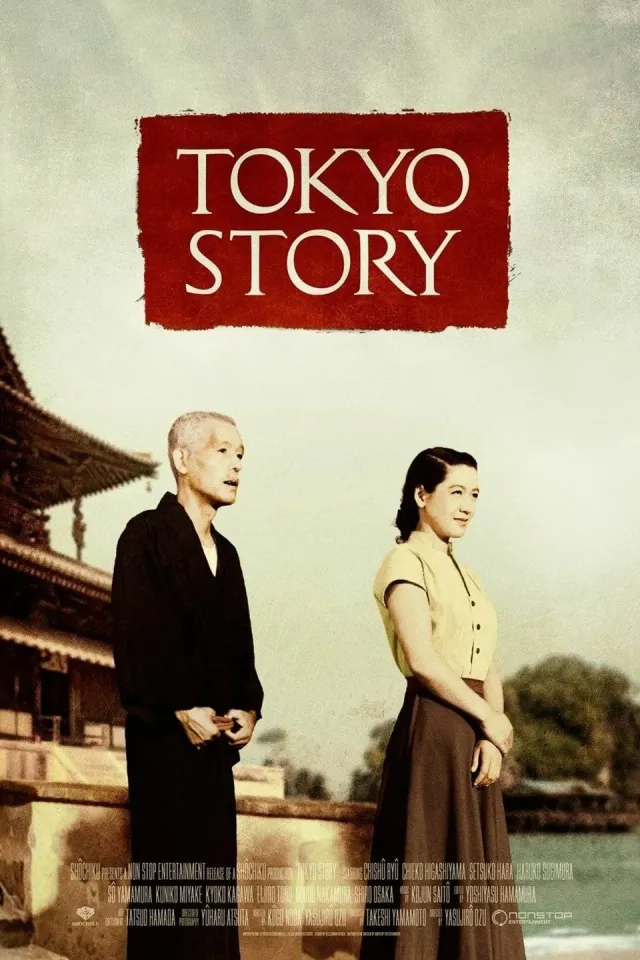
What changes Its own story: A visit by elderly parents exposes the distance between generations as their adult children balance affection with urban routines and obligations.
An aging couple, Shukichi and Tomi Hirayama, travel from their coastal town to Tokyo to visit their adult children and grandchildren. Their son and daughter are busy with work and family, and arrange a brief trip to a seaside resort rather than spending much time with them. Noriko, the widow of their deceased son, treats the couple with particular kindness despite her own modest life. When Tomi becomes ill, the family’s attentions reveal different forms of affection, duty and regret. Ozu follows these changes through small domestic gestures rather than dramatic confrontations. The visit’s short duration turns small family accommodations into signs of affection, impatience and regret.
A domestic arrangement produces a disputed incident whose interpretation threatens two families' futures.
Why this matches +
These films share important themes, atmosphere or storytelling interests with this selection.
Genres: Drama
Shared film traits
Based on recorded story, mood and style. Your preferences can change the order.
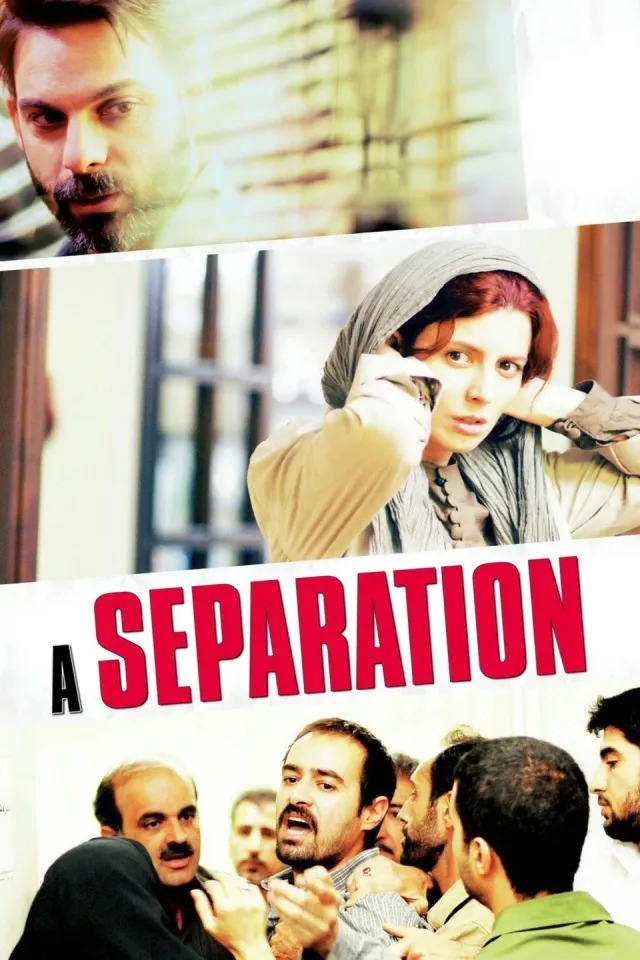
What changes Its own story: A domestic arrangement produces a disputed incident whose interpretation threatens two families' futures.
A couple's disagreement about leaving Iran leads to a household separation and the hiring of a caregiver for an elderly father. An incident between the caregiver and the husband produces accusations whose consequences reach both families. Class, religious obligation and partial knowledge complicate every account, while a daughter is pressed to navigate loyalties that the adults cannot reconcile.
A precarious household takes in a neglected child and forms a family through care and theft.
Why this matches +
These films share important themes, atmosphere or storytelling interests with this selection.
Genres: Drama / Crime
Shared film traits
Based on recorded story, mood and style. Your preferences can change the order.
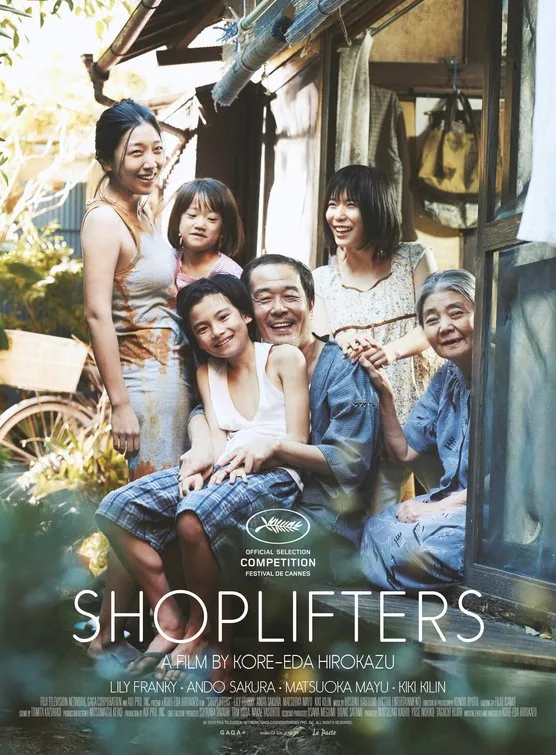
What changes Its own story: A precarious household takes in a neglected child and forms a family through care and theft.
A poor Tokyo household survives through a mix of informal work and petty theft, with adults Osamu and Nobuyo caring for children who have limited security elsewhere. When the family brings a neglected young girl into their home, ordinary routines deepen into attachment and questions about who counts as family. Hirokazu Kore-eda's drama observes tenderness alongside ethical uncertainty, gradually revealing the histories and choices that hold the household together.
Daily needs and modest hopes shape a family's life while children discover possibilities beyond its immediate limits.
Why this matches +
These films explore a related idea in a different setting, genre or style.
An adjacent discovery: a related idea with a different viewing experience.
Genres: Drama
Shared film traits
Based on recorded story, mood and style. Your preferences can change the order.
Coming of age
What changes Its own story: Daily needs and modest hopes shape a family's life while children discover possibilities beyond its immediate limits.
A boy grows up in a poor rural Bengali household with an older sister whose curiosity guides his encounters with the wider world. Their mother's daily effort to keep the family together contrasts with their father's hopes for work and advancement. Small discoveries, family tensions and material insecurity unfold through changing seasons, allowing wonder and loss to emerge from the same ordinary surroundings.
Episodic childhood play gradually reveals an unstable household whose economic pressures are approaching consequences the child cannot control.
Why this matches +
These films explore a related idea in a different setting, genre or style.
An adjacent discovery: a related idea with a different viewing experience.
Genres: Drama
Shared film traits
Based on recorded story, mood and style. Your preferences can change the order.
Coming of age
What changes Its own story: Episodic childhood play gradually reveals an unstable household whose economic pressures are approaching consequences the child cannot control.
A young girl spends a summer roaming the budget motels and improvised play spaces near a major Florida tourist resort. Her mother's precarious work and escalating conflicts remain only partly visible through the child's adventures, while a motel manager repeatedly balances compassion against practical limits. The pleasures of unsupervised friendship unfold beside the risk of losing a fragile home, exposing a gap between childhood imagination and the adult systems shaping it.
A family’s response to Mabel’s behavior leads to psychiatric treatment and a tense attempt to rebuild life at home.
Why this matches +
These films explore a related idea in a different setting, genre or style.
An adjacent discovery: a related idea with a different viewing experience.
Genres: Drama
Shared film traits
Based on recorded story, mood and style. Your preferences can change the order.
What changes Its own story: A family’s response to Mabel’s behavior leads to psychiatric treatment and a tense attempt to rebuild life at home.
Mabel Longhetti is devoted to her children and husband Nick, but her unpredictable behavior alarms the people around her. Nick struggles to reconcile love for her with the expectations of their family and community, eventually agreeing to psychiatric treatment. When Mabel returns home, both face the difficult question of whether the household can welcome her without demanding that she become someone else.
A family infiltration succeeds through staged appearances and replacement of workers, then an unforeseen encounter exposes competing claims to the security the household represents.
Why this matches +
These films explore a related idea in a different setting, genre or style.
An adjacent discovery: a related idea with a different viewing experience.
Genres: Drama / Thriller
Shared film traits
Based on recorded story, mood and style. Your preferences can change the order.
What changes Its own story: A family infiltration succeeds through staged appearances and replacement of workers, then an unforeseen encounter exposes competing claims to the security the household represents.
A young man from a financially insecure Seoul family gains a tutoring job in a wealthy household using invented credentials. One appointment becomes a coordinated effort to place his relatives in other domestic roles, each concealed behind a separate identity. Their apparent ascent depends on the same insecurity they displace onto other workers, and an unexpected return reveals how much the house's comfortable surface has hidden from both employers and servants.
The film begins near its later turning points and revisits childhood through warm memory sequences. This structure makes Beth’s illness and Jo’s writing feel like forces shaping the sisters’ futures rather than a single chronological march.
Why this matches +
These films explore a related idea in a different setting, genre or style.
An adjacent discovery: a related idea with a different viewing experience.
Genres: Drama / Romance
Shared film traits
Based on recorded story, mood and style. Your preferences can change the order.
Coming of age
What changes Its own story: The film begins near its later turning points and revisits childhood through warm memory sequences. This structure makes Beth’s illness and Jo’s writing feel like forces shaping the sisters’ futures rather than a single chronological march.
Greta Gerwig’s adaptation moves between the March sisters’ youthful household and their adult lives, using a non-linear structure to make memory, loss and ambition speak across time. Jo pursues writing and financial independence, Meg chooses a less publicly celebrated domestic life, Amy weighs artistic aspiration against material limits, and Beth’s illness shapes the family’s sense of what can be preserved. The publisher’s demand that Jo’s novel end in marriage creates a final ambiguity between character and author: the film gives her a romantic conclusion while also showing her negotiate ownership and payment for her book. This is neither a simple rejection of Alcott’s ending nor an unambiguous confirmation of romance. The two timelines let Jo’s authorship and lived future remain productively entangled.
A staged family celebration turns knowledge of approaching loss into a practical dispute over who should carry emotional responsibility.
Why this matches +
These films explore a related idea in a different setting, genre or style.
An adjacent discovery: a related idea with a different viewing experience.
Genres: Drama / Comedy
Shared film traits
Based on recorded story, mood and style. Your preferences can change the order.
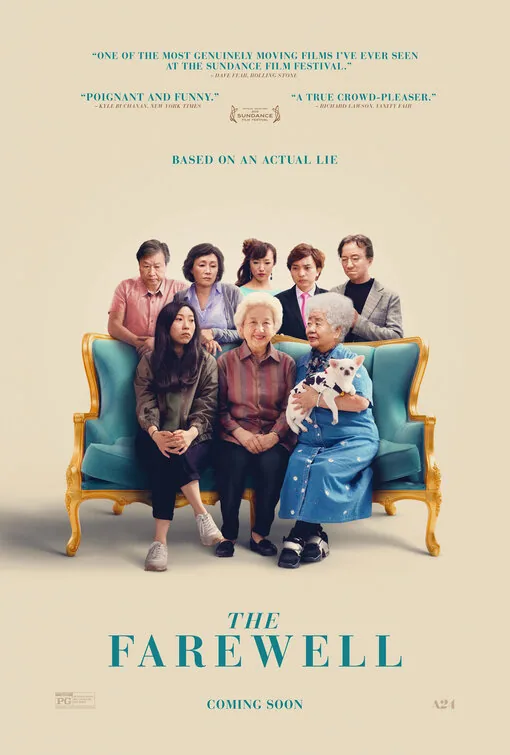
What changes Its own story: A staged family celebration turns knowledge of approaching loss into a practical dispute over who should carry emotional responsibility.
A Chinese American woman learns that her grandmother in China has received a terminal diagnosis that the family intends to conceal from her. A hastily arranged wedding creates a reason for relatives living abroad to gather without revealing why they have come. Returning against her parents' advice, the granddaughter struggles with a form of care that depends on collective concealment, while recognising that migration has already complicated what belonging and responsibility mean.
An adult revisits family memories and a sibling's death while the film places his private grief beside an immense cosmic history.
Why this matches +
These films explore a related idea in a different setting, genre or style.
An adjacent discovery: a related idea with a different viewing experience.
Genres: Drama / Coming-of-age
Shared film traits
Based on recorded story, mood and style. Your preferences can change the order.
What changes Its own story: An adult revisits family memories and a sibling's death while the film places his private grief beside an immense cosmic history.
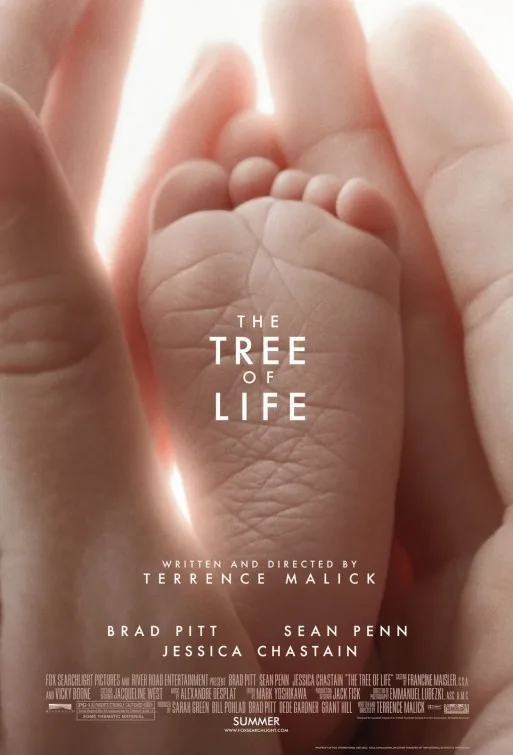
Adult Jack reflects on his childhood in 1950s Texas, where his mother's warmth and his father's strict, ambitious parenting shaped his ideas about love and power. The memory of a family loss runs through his recollections, making ordinary moments of play, discipline and sibling rivalry feel charged with questions he could not answer as a child. The film moves between Jack's present, fragmented family memories and vast images of the universe's origins, placing private grief beside the scale of creation. Rather than offer a single explanatory account of the past, it lets images, music and recurrence carry much of the emotional argument. Jack's adult search is for a way to hold anger, love and absence together.
During a hot summer in northern Argentina, Mecha drinks beside a neglected swimming pool at her family’s country house and suffers an accident. Her cousin Tali manages a busy household nearby, and the two families’ children and servants move between their overlapping worlds. Small incidents and strained conversations reveal class divisions, resentment and the unease beneath an apparently ordinary holiday.
What drives the story
A household accident and a long oppressive summer expose tensions among related families living in close proximity.
The people at its centre
Mecha, Tali, their children and the household staff experience the same social world from unequal positions of responsibility and power.
What it feels like
Overlapping voices, heat and fragmented details create a sensory portrait of family inertia and unspoken anxiety.
Worth knowing
The film is an ensemble observation of domestic and class tensions, not a mystery that neatly resolves each incident.
Family tensionClassNeglect
Mood
Stifling · Uneasy · Observant
Pacing
Episodic · Measured
Visual style
Dense sound design · Close domestic detail
Storytelling
Interwoven households · Domestic accident · Class divisions